お正月 (Oshougatsu)
明けまして おめでとうございます (Akemashite Omedetou Gozaimasu)
— Saying to each other and celebrate the New Year. Thanking the gods for letting people pass through the previous year safely, and celebrating about welcoming the gods again to earth.
A Happy New Year! In Japan, it is the celebration of welcoming the gods who bring happiness, harvest and good health. This celebration generally lasts the first 7days after the new year started, however some part of Japan continue celebrating until 20th January (Western area). The first 3 days are called ‘Sanganichi’, most of company takes holiday for those days. Then days until 7th January are called ‘Matsu no uchi’, keeping the Matsu (Pine tree) decoration in place.
In New Year time, people welcome the god who comes to each houses from the high mountains called ‘Toshigami-sama’ by locating New Year decoration such as Kadomatsu (Pine tree decoration), Shime-kazari (Rope made of straw and hemp) and Kagami-mochi (Round-shaped rice cake).
Kadomatsu
Works as a landmark by displaying so that god can find and visit the house. It is the symbol of healthy and long life. ‘Matsu’ pine tree (松) is the same pronunciation as waiting (待つ), therefore it is implied as waiting for god.

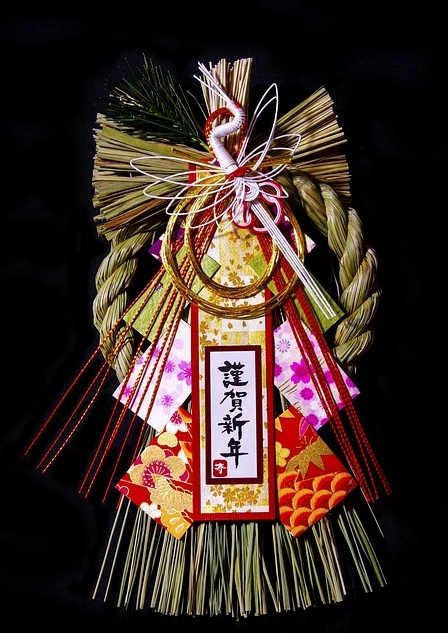
Shime-Kazari
It is the landmark of clean place where cuts down the impurity. Normally displayed in front door of the house.
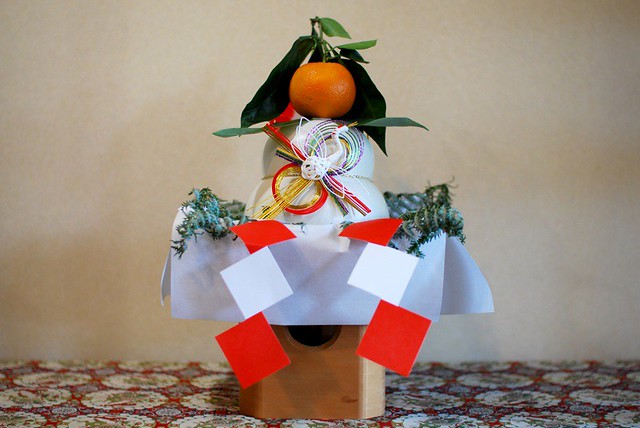
Kagami-mochi
In old time, mochi (rice cake) were eaten in the special occasion such as celebration. It is considered as food that gods eat. The shape of the Kagami-mochi looks like a circle mirror (DouKyou – kyou also pronounced as ‘Kagami’) which is believed as a place where gods stay inside, so it is called as it is.
 Little Japan Dictionary
Oh, I came late here!
But 明けまして おめでとうございます
Yes, it’s stupid but Save it for next year. Who knows in the midst of a time where the individual gonna end up.
LikeLike