節分 (Setsubun)
Day of separating the season. It comes 4 times per year but Setsubun that separates winter and spring is considered as important.

鬼は外、福は内 (Oniwa soto, Fukuwa uchi)
This is what you hear in the evening on 3rd February – meaning, ‘go away evil, come in fortune!’ Throwing the roasted soy beans (福豆 – Fukumame) toward outside and inside the house where evil (鬼 – Oni) might be around, this action is believed to kick the evil out. = 豆まき (Mame maki)
The origin of Setsubun came from Chinese ritual called 追儺 (Tsuina), take bow and arrow to kick the evils away. When it came to Japan, the action changed to throwing roasted beans, in order to also wish for harvest.
鬼 (Oni) is the common symbol of evil. It was believed that all the disasters, famines and illnesses were Oni’s fault.
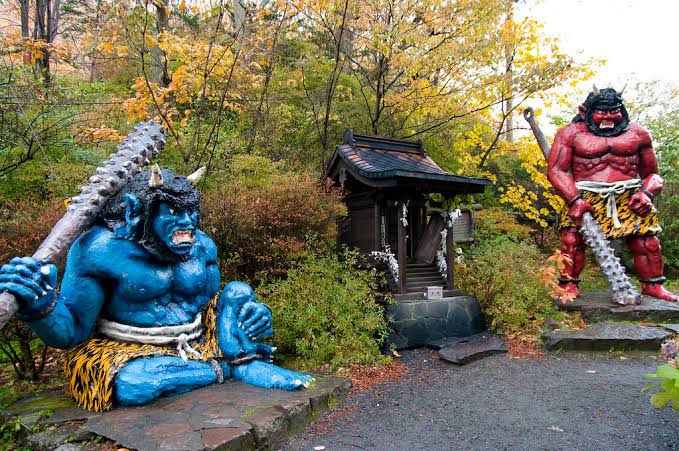
Scattering roasted soy beans also has meaning – as bean is 豆 (Mame) and roast is 炒る (Iru) in Japanese. ‘Mame’ can be written 魔滅 = destroying evil and ‘roasting’ beans can be considered as 魔の眼を射る ‘Ma no me wo iru’ = shooting the eye of the evil.
Interestingly, in northern area like Hokkaido, they scatter peanuts with shells instead of the roasted beans so it is easier to find the beans on the snow.
Before the Setsubun night, place the measuring box filled with Fukumame on the shrine shelf in the house. If the house does not have the shrine shelf, placing in the southern direction at home is fine. After throwing the Fukumame, family members eat the left over beans – the same number as their age, so that it can prevent illness for the year. If they cannot eat the Fukumame same number as the age, drinking the tea called 福茶(Fukucha), putting 3 Fukumame beans, salted kelp and salted plum, can bring the good health for the year.
People place holly with grilled ardine’s head in entrance, as Oni hates the smell of fish and thorn from holly.
 Little Japan Dictionary
◙
LikeLike