2nd February – 如月

恵方巻 (Ehoumaki)- Fortune Sushi Roll

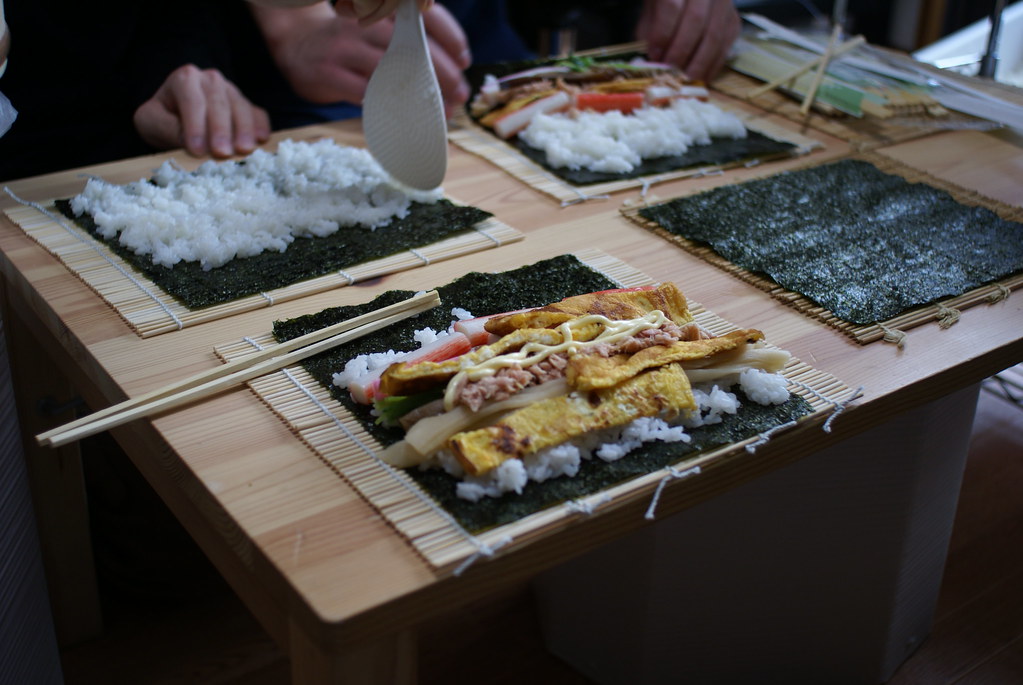
Thick sushi roll with generally 7 different ingredients inside. Eat in the night of 節分(Setsubun) on February 3rd. Celebrating the new coming season and wishing for business prosperity.

Every year in the early February, it falls in the separation period of season from winter to spring. This separation period is called 節分 (Setsubun) and this year it falls on 3rd of February. (Will explain more about Setsubun on tomorrow blog)

When it is the separation period of the season, it is believed that evil will come around. Therefore, on the separation day, Japanese do talisman ritual – On February, throwing roasted soy beans will expel evils.

On this day, Japanese eat one huge sushi roll per person without talking while eating this roll. This conduct is believed to bring luck and happiness to them.
SONY DSC

This sushi rolls are called ‘恵方巻’ (Ehoumaki), and has some rules in order to make the wish comes true.

  1. Eat in the night of Setsubun night
  2. Eat the whole roll by oneself, without talking to anybody but wishing in one’s heart
  3. Do not cut the roll
  4. Looking at the certain direction (恵方 Ehou) – lucky direction for the year

This lucky direction is the direction where 歳神様 (Toshigami sama) from the new year stays at and it is said that everything that people do toward this direction will be successful and bring luck.

Ehou for each year is already fixed:

When the last number of the year is

-4, 9 = East Northeast

-0, 5 = West Southwest

-1, 3, 6, 8 = South Southeast

-2, 7 =North Northwest

Therefore, this year is 2020, 0 is West Southwest. looking at this direction to eat Ehoumaki might bring your dream comes true.

This tradition was introduced in order to promote sushi industry and increase seaweed sales. Conbini (Convenience store) gradually started selling it and bring a good sales so they keep selling it in this season. On the other hand, the left over after 3rd February is tremendous so it is urgent to take an action toward this food wastes.
1st February – 如月 (Kisaragi)

日本の使える言葉 (Tsukaeru Kotoba)‐ Japanese Useful Words

The following words have official meanings but did you know there are different interpretation depending on the situation?

寒い (Samui): cold – This also means not funny. Somebody saying old jokes which are not funny anymore = そのジョーク、寒いよ。。。(Sono Jyoku, samui yo): That joke is old fashion and not funny.

痛い (Itai): Hurt – This also means pathetic, embarrassing to watch, often written in Katakana. When you see somebody who decorates his / her car with anime character all over and feels embarrassing to watch and would not do the same = あの車、イタい。。。(ano kuruma, itai): That car looks embarrassing and I would not do the same.

There area many ‘New’ words that are often used mostly by younger generation, those are probably not taught in language school but used in real life a lot. Today’s blog is going to give some useful words but should not be used in formal talks!

やばい (Yabai): Originally means dangerous, original Kanji was 厄場(Yaba). Now it is stands for expression for more emotions such as wonderful, beautiful, happy, delicious, wow, funny, very bad, impressed, weird…….and more. Basically this word can express all the emotions both positive and negative, this can be interpreted depending on context.

すごい(Sugoi): Originally means extreme. Now it can be used as brilliant, impressive, wow as well as the actual meaning. Sugoi is an adjective so the latter word should be noun, Sugoku is an adverb so adjective comes next. Many Japanese confuse with this difference and use Sugoi with adjective (eg:すごい面白い人… Sugoi omoshiroi hito Very funny person). In this example case, using Sugoku is the right way to make this sentence.

まじ(Maji): Word comes from 真面目 (Majime) – hard-working, and it means for real, truth, really, seriously. Often written in Katakana. These days, many young generation use Maji with 卍 (Manji) saying マジ卍 (Maji Manji). Among young generation, apparently 卍 seems like it can emphasize the meaning. This stands for really Yabai, Really Sugoi or the person is very cocky.

うける (Ukeru): Means funny, LOL. Origin word was 受ける(ukeru)、getting awards, praise.

どうも (Doumo): Originally means impressed and cannot express in words. Nowadays, it is used for casual hi, hello, thank you, sorry and probably. Many people omit the word which should come after like Doumo Konnichiwa, Doumo Arigatou, however it is grammatically incorrect.

If you nail with this expression and use in real life, your Japanese friends will surprise how great you use those 若者言葉(Wakamono Kotoba)!=Younger generation words

31st January – 睦月

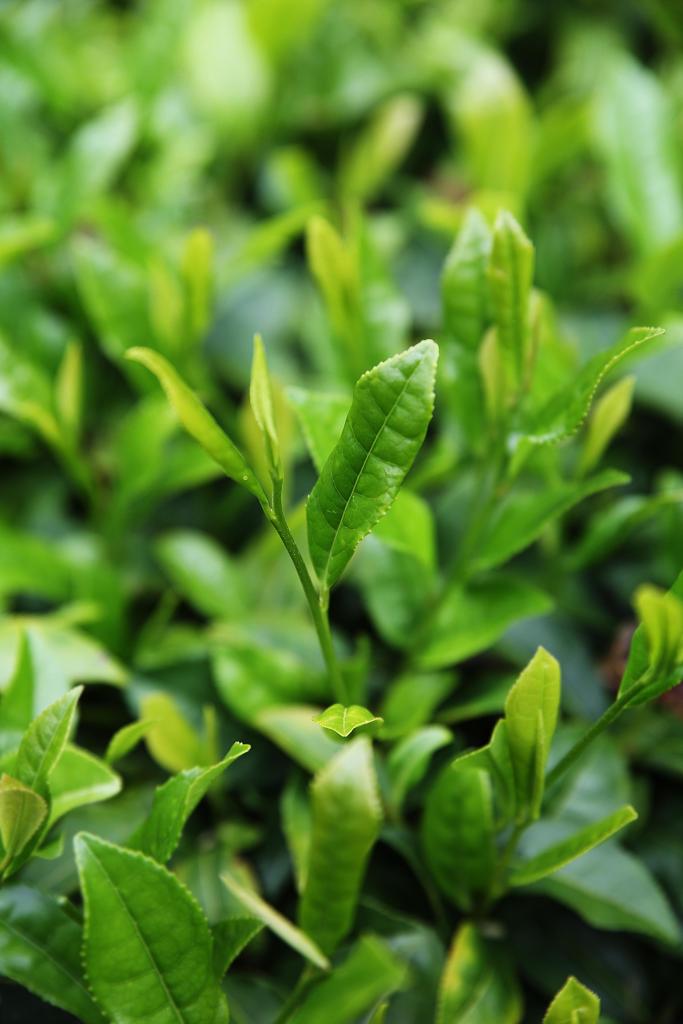
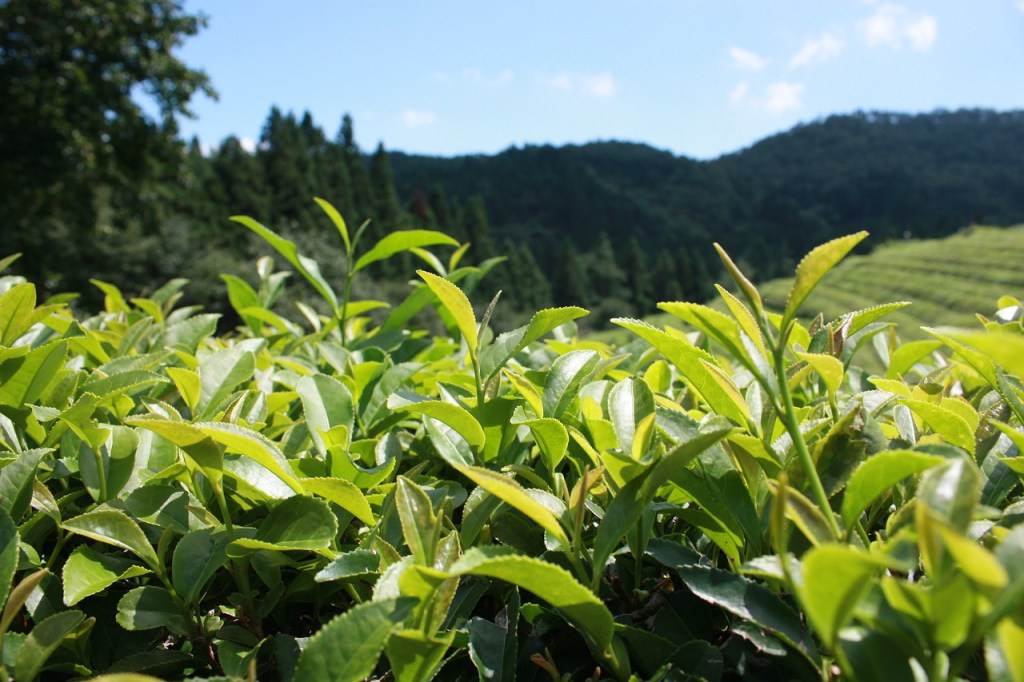
日本茶 (Nihon-cha) – Japanese green tea

Japanese green tea is becoming famous around the world these days – with the familiarity of Matcha flavors.

There are different types of Japanese green teas:

-煎茶 Sencha: The most common and general green tea. Steam the tea leaves (Newly born in the year) and rub them while drying to get lid of the moisture.

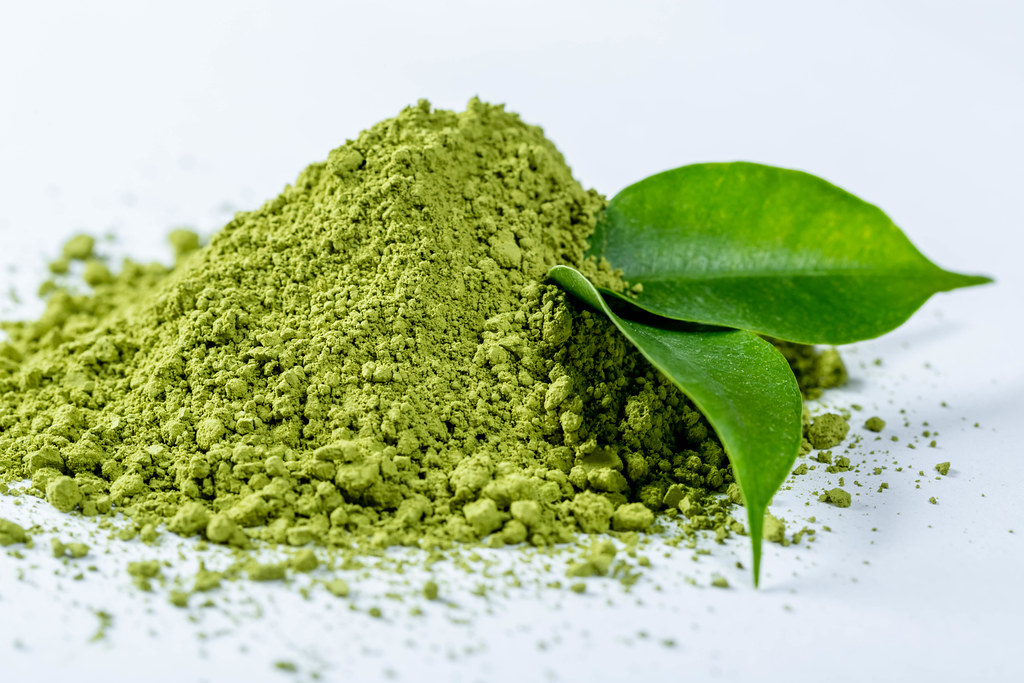
抹茶 Matcha: powder tea with strong bitter taste. Using the tea leaves which are covered by cloth when they are growing. Steam those covered leaves and dry them without rubbing. Then grind with a mortar.

玉露 Gyokuro: less bitter taste than Sencha. Using same procedure as the Sencha but using the tea leaves which are covered by cloth to avoid the direct sun lights.

-ほうじ茶 Houjicha: Roast the tea leaves (After the first born leaves, picked around mid of June) with stronger fire. The color of the leaves are brown.

-玄米茶 Genmaicha: Roast brown rice and mix with Sencha. Crispy smell in the tea.

…and more!

As a result of the different process, all have different taste, colour and smell.

Green tea was first introduced to Japan in Nara / Heian era (710~1192). People went abroad to China to learn about their great invention and culture, they brought back the green tea. It was drunk as a medicine in China. Green tea was very precious at that time so only nobility could drink them. Because of that, the culture of drinking green tea once faded away from Japan, however in 1191 another person brought the trend back again.

In Edo era, it spread to public and then the Japanese original way of producing green tea (Sencha) was created.

Various researches revealed that green tea has great effects for human body.

Green tea contains a component called Catechin which can prevent cancer, toothache, virus, HIV and lower the inner body fat and blood pressure. It also contains caffeine which can make oneself awake, prevent hangover, diuretic effect and increase the exercise capacity.

Even after drinking the tea, the leaves can utilize for other things:

-Using the wet tea leaves to clean up the mirror to make it anti-fog

-Using the wet tea leaves to clean up the sink, faucet, chopping board to make it shine, and-virus

-Warm the tea leaves in the microwave to get rid of the smell inside

-Dry the tea leaves and wrap in the cloths, to use as a room deodorant

-put in the flower pods to use as a natural fertilizer

Nowadays however, the Japanese green tea has faced trouble for its production.

Due to the aging population and decrease in people willing to work in tea farm, less and less people produce the green tea. Moreover, there are different foreign teas attracting consumers so demand for Japanese green tea is not stable as it used to be.

Green tea has a lot benefit for human body and reusable for something else after enjoying the tea. To save this beautiful nature gift, why don’t we drink more green tea?:)

30th January – 睦月

富士山 (Fujisan)Mt. Fuji

Active volcano with height 3776m. The highest mountain in Japan located between Shizuoka prefecture and Yamanashi prefecture.

Mt. Fuji became the beautiful symmetry shape about 10,000 years ago due to the volcanic action. In the winter time it is closed but in the summer season, from early July till early September, people can crime up to the top.

There are 4 routes to climb Mt. Fuji. Until to the fifth station, it is accessible by bus, car and taxi. It is recommended to take a overnight trip to the Mt. Fuji rather than one day trip, as there is a risk of getting altitude sickness. Also it is required to book the mountain hut to stay, so it is needed to prepare and plan well for the Mt. Fuji trip.

At the top of the mountain, the temperature can go below 0 even in the summer time, so bringing a warm clothes is the wise way to survive. For the bathroom use, Mt. Fuji governor asks visitors to donate 100-300yen (1-3USdollars) – this is because it requires huge amount of money for waste treatment in Mt. Fuji.

Although the top of the Mt. Fuji does not have the address, Shizuoka and Yamanashi have been arguing which prefecture own Mt. Fuji.

Many visitors come to see Mt. Fuji in Shizuoka and Yamanashi as both side has different beautiful views:

Shizuoka: view with tea farms, shinkansen, beach

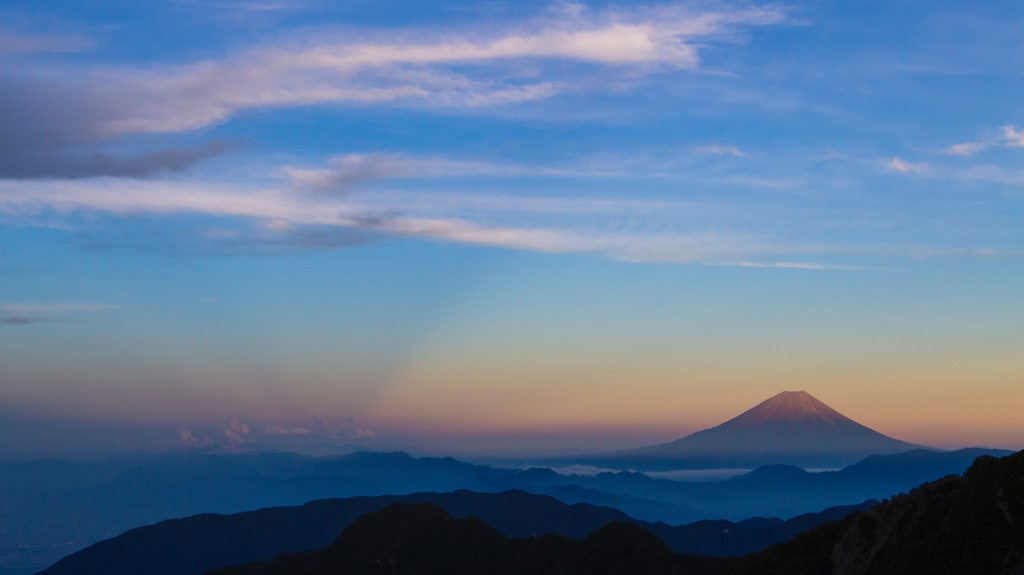
Yamanashi: view with five lakes, sunset (赤富士-Akafuji)

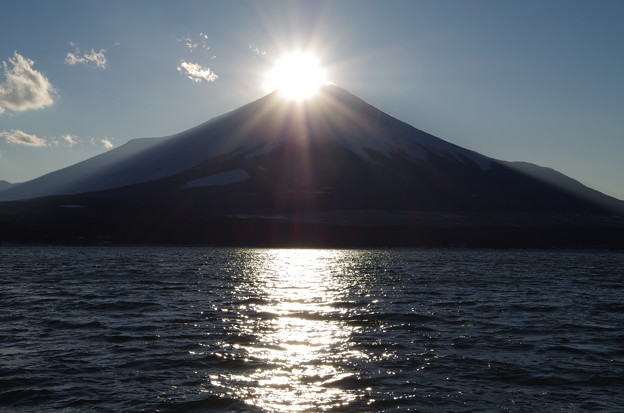
ダイアモンド富士 (Diamond Fuji)

When the sun comes right at the top of the Fuji, it shines like a diamond, therefore many people goes to take a shot of this picture.

In addition, just below the Mt. Fuji, there is a forest which has started to gain more recognition from foreign tourists.

OLYMPUS DIGITAL CAMERA

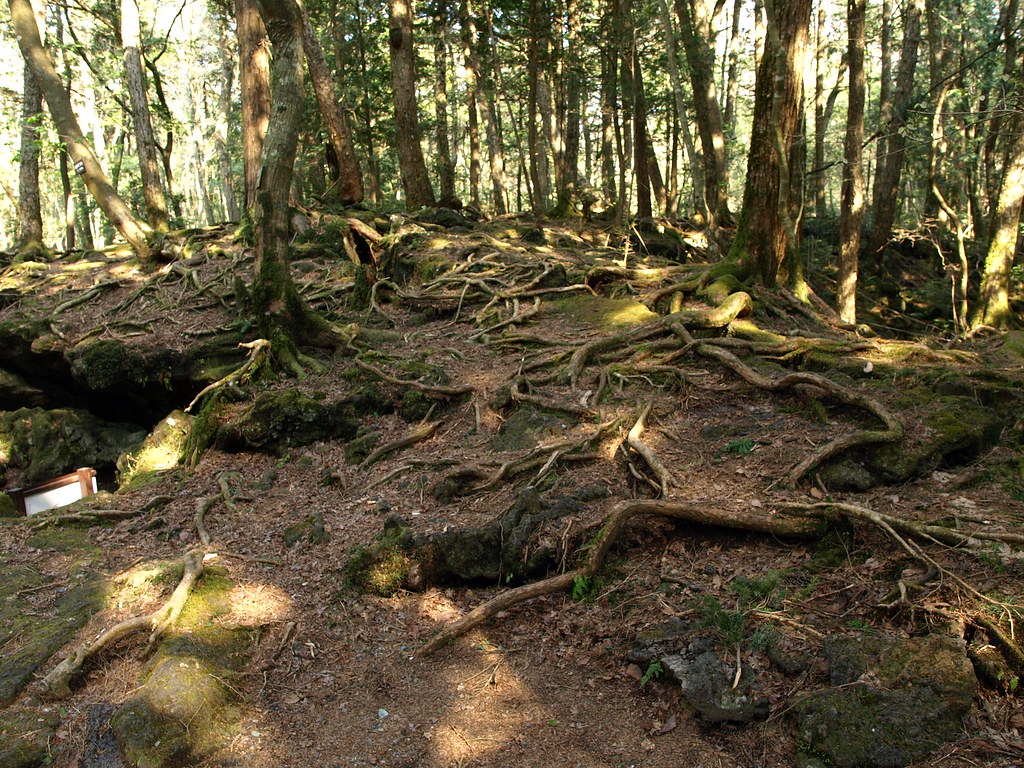
青木ヶ原樹海 (Aokigahara-Jyukai)

Huge forest, known as famous ‘suicide forest’. There are many wild animals living.

Many people still believe the urban legend related to this forest. ‘the campus does not work inside the Jyukai’- it was already researched, some spot can be true due to the magnetic rocks, but mostly campus works, so people will not lost the way easily. Another rumor is ‘There is a village where people who could not suicide live’. – it is false but there is a village (people there did not try suicide). Notably, there are many facilities for different religions. People secretly gather inside the Jyukai forest and pray for their own gods…

There are more fantastic things about Mt. Fuji, I might introduce more about it later on as this blog flows, so stay tuned!

29th January – 睦月

自動販売機 (Jidou-hanbaiki)- Vending Machine

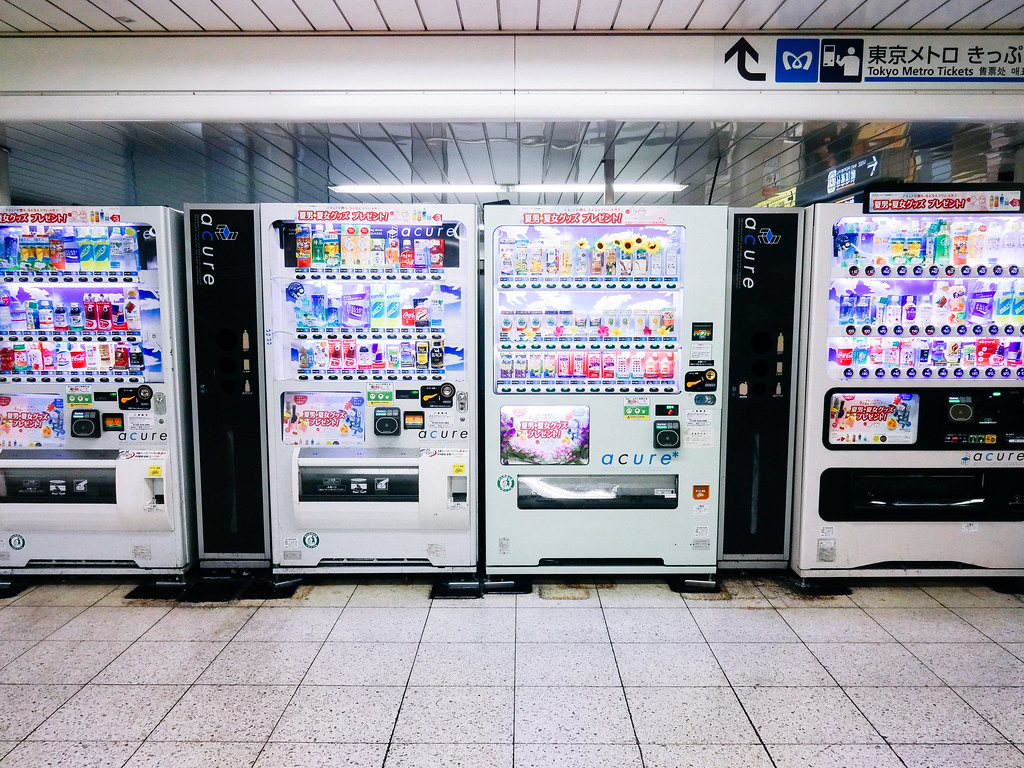
When you are in Japan, probably you will realize that there area heaps vending machine everywhere – You can get cold or hot drinks any time.

It is believed that Japan is safer country compared to the other ones, so there has been less crime (stealing / breaking) occurred related to Vending machine. Also because Japan is sadly known as overworking country and it is true, people finishing work very late can access drinks easily.

Not many people would have even thought about but there is a small ‘Omotenashi’ for the machine users – every time when you get the drink from the machine, you hold the right direction so you can open the can / bottle straight away (Not upside down). *This only applies for right handed people This is because when people fill up the machine, they place the top of the cans / bottles side to left, so when buyer grab the drink with right hand, the lid automatically comes to the top.

In 1961, Coca Cola placed the very first vending machine in Japan and the number of them has been increasing. Most machines have hot and cold drinks and some machines have game on it – if people win, they can have another drink for free! There are not only the ones selling the cans and bottles, but also machines which the drinks come out in the cups. Nowadays, there are touch screen machines appeared around so vending machine industry keeps evolving.

Some people can earn good money from just renting the small spot for vending machine. If the area have sound number of people or car passing, people can apply for renting the land for vending machine. The profit from each sales up to 15% will goes to the land render so the more people buy drinks from that machine on their land, the more they can earn from it. However, the land owners have to pay for the electricity bill, so the sales has to be a lot higher than costs to be successful.

In Japan, there are variety of unique vending machine selling different stuffs.

Relatively many:

-cigarette

-ice cream

Rare:

-pizza

-crape

-shampoo

-udon

-bag

-Dashi (stock)

-diaper

And I personally surprised that there is a vending machine sells engage ring! All the rings are free sized, and it costs 9000yen + tax (About 90US dollars+tax). Not too romantic ring to get, but at least people can propose to engage whenever they want to!

28th January – 睦月

鍋 (Nabe)- Japanese Hot pot

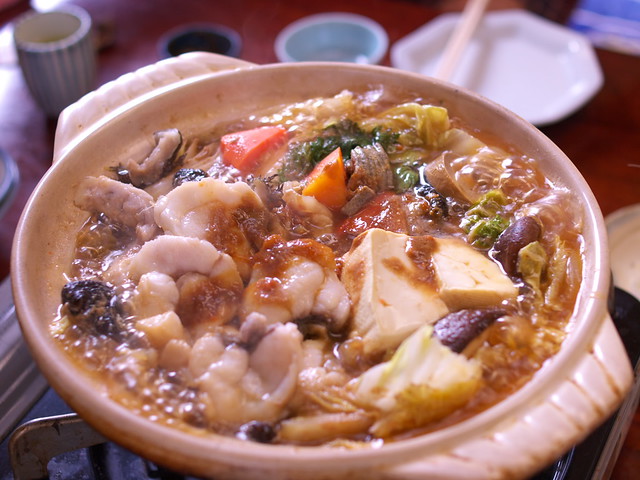
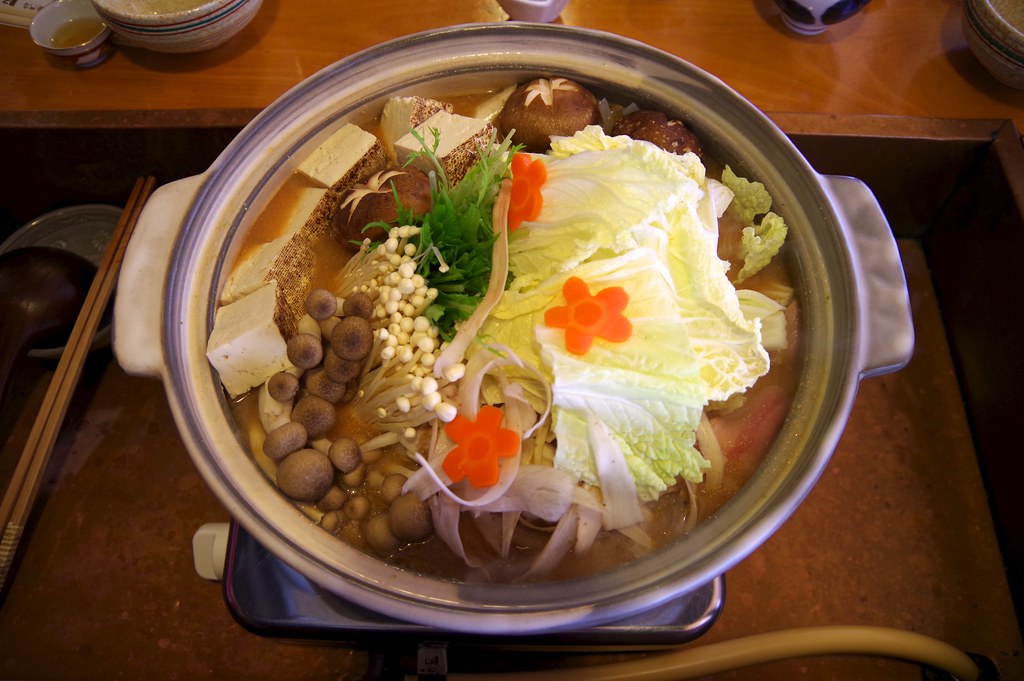
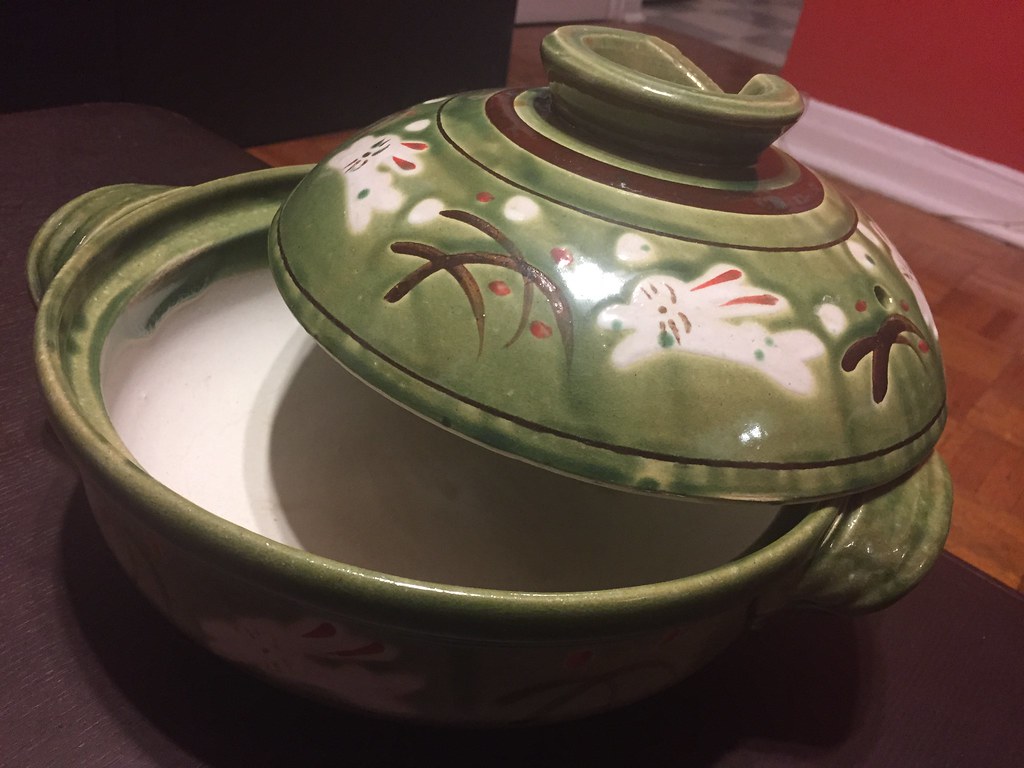
Nabe can be the pot itself and the food made inside the pot. Boil the food such as vegetables, meat or seafood in the pot. Boiling those ingredients will provide a better digestion and absorption. Soup keeps the nutrition from the ingredients.

In the winter season, eating Nabe with family and friends keeps you warm. There are variety kinds of Nabe; 山の鍋(Yama-no-Nabe) =Vegetables , 海の鍋 (Umi-no-nabe)=Seafood, Soy base, Kimchi base, soymilk base, region specials like Kiritanpo …. many more, so you won’t get enough of eating Nabe!

The habit of eating Nabe was already started more than 2400 years ago in Japan. At first, they used the earthenware, and when the iron was introduced, they shifted to use the iron pot.

In the Edo era, the trend was to eat small pod by oneself, but in the late Edo era it turned to be some people eating from one big Nabe and it continues till today.

Before 1860s, people generally ate Nabe with veges and seafood, but when the Meiji era started and eating meat became popular, beef Nabe was introduced and became famous.

Here are some of the trivia about Nabe:

  • Have you ever heard of ちゃんこ鍋 (Chanko-Nabe)?

It is the Nabe made by Sumo players. Normally with Chicken stock base; this is because chicken stand with 2 legs which related to the sumo players on the ring, wishing to win. The meat balls in this Nabe is white, since white stands for winner in Sumo game, 白星(Shiroboshi). On the other hand, Black means loser 黒星(Kuroboshi).

  • Are you picky about when to put each ingredients into Nabe? – Meat first and 2 min later hard veges and then 5 min later leafy veges…

If you are this kind of person and keep the control of Nabe rules, you are 鍋奉行(Nabe-bugyou)!

  • When you boil the ingredients, there will be some grey things comes up, that is the components tastes bitter and the Nabe doesn’t look nice. So it is recommended to get rid of it, BUT do not take them completely. As taking too much of it will reduce the Umami!
  • The cray pot for Nabe is very weak for sudden temperature change. If the cray pot got the crack, it is recommended to make the porridge. This is because starch from rice can fill in the crack and coat the surface.

Here is the one of my favorite Nabe restaurants, Akakara! In this shop, you can pick how spicy the base soup from 1 (Mild) to 10 (Max)! I heard from the waitress that there were very few people ordered the 10, and even the steam from that Nabe hurt her eye! The most ordered number is 3 – 4, so if you have a chance to visit, why not:)

The website does not have an English translation, but if you have a brief idea of this shop: http://www.akakara.jp/

27th January – 睦月

日本の怪談 (Nihon-no-Kaidan)- Japanese Ghost Story

Thanks to the request from my blog reader, once per month I am going to introduce some famous ghost stories in Japan!

Many Japanese people love the horror stories and every summer, there are many TV programs showing ghost related shows. This is because summer is when the soul of dead people comes back to earth – called お盆(Obon) – (Will explain when the season comes later on, stay tuned!). There exists number of areas where a lot of people have seen the ghosts and some curious people visit there and try to see them or take films.

The first topic is related to school ghost –

SONY DSC

トイレの花子さん (Toire-no-Hanako San)- Little girl Hanako from the school bathroom

She lives in the third cell of the ladies bathroom, wearing red skirt with bobbed hair style. Knocking from the first cell of the bathroom, asking 花子さんはいますか?=’Are you there Hanako san?’. When knocking the third cell and ask this question, it is believed she will knock back the door and will drug person who knocked into the cell.

Hanako san actually has the model: The sad crime story from Iwate prefecture Touno area. In 1937, there was a family with 2 daughter and 1 son, wife and husband who was a police. The husband police cheated the wife and went to hot spring with prostitute. The wife found out this fact and got extremely furious, at the end she decided to commit suicide and killed the kids – the younger sister and son were killed first and the older sister, called いくこ (Ikuko) could ran away from her mom. She escaped to the elementary school which was at the back of the house and hided inside the bathroom – One school janitor man saw her going there…

Ikuko’s mom came to the school and screaming where she is, and asked to Janitor man. This man told her she is inside the bathroom – She found Ikuko.

The next day, the family including Ikuko was found dead.

After this incident, strange phenomenon occurred in the bathroom where Ikuko hided.

The reason why the name has been changed from Ikuko to Hanako is considered as the name Hanako is often used for example names for girls, therefore when this story was transmitted it was changed to the general name.

口裂け女 (Kuchisake-Onna)-Cracked mouth lady

The rumor of the cracked mouth lady spread from Gifu prefecture in 1978 – 1979. The long black hair lady wearing mask came to the elementary school kids and ask ‘Am I beautiful?’, the kids answered ‘Yes’, then she showed her mouth cracked until the ears and asked ‘Even like this?’ and attacked them. Another rumor says the lady had scissors and cut the kids’ mouth like hers.

This Kuchisake Onna is the ghost of the one ladies who failed her plastic surgery. She is the oldest member of 3 sisters, and other 2 sisters surgery were successful. However, second sister died from the car accident, so the youngest one was the only one reminded beautiful. But she got nut because of her sisters and tore up her mouth just like her oldest sister.

There are some solution when elementary school kids confront the Kuchisake Onna. One is to tell her the dog is coming. As Kuchisake Onna was believed to be scared of dogs, she would run away. Another solution is to recite ‘ポマード’ = Pomard three times. The surgery practitioner was called Pomard, so she gets scared of hearing this name.

In 1979, there was a woman imitated this ghost and walked around the city with knife in Hyogo prefecture, she got arrested.

There are various opinions but this story was believed to be created in order to make the kids give up on going to private lessons. At that time, only kids from rich family could go to the private lessons, so the middle class family told this story to the kids and made them scared to commute to the lessons.

26th January – 睦月

インターネットカフェ (Internet Cafe)

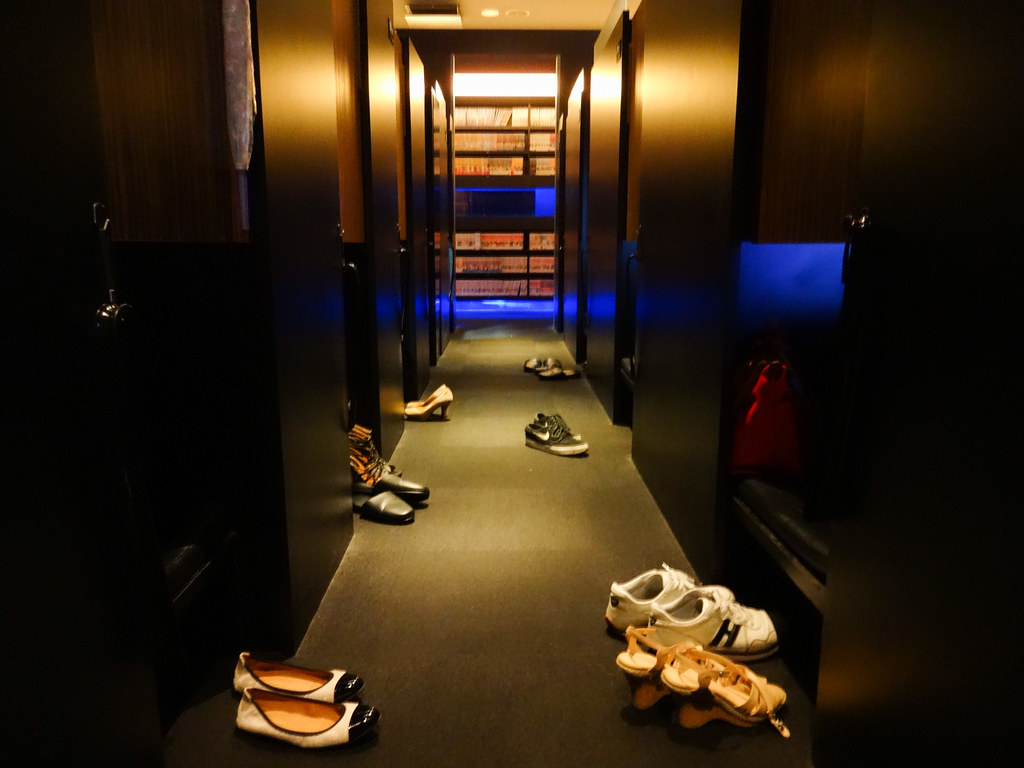
The cafe with the right to use set of computer for each person. Also called as Cyber cafe, 漫画喫茶 (Manga kissa). Opens for 24 hours

Have you ever seen the shop like this picture in Japan?

A lot people know this shops exist, but not many people utilize it as there are some prejudice toward Net Cafe – Dirty, filthy and only Nerds go there –

However, actually those shops have brilliant features and it seems lame not visiting there!

Net Cafe offer one space with computer for each visitors and charge the stay per hour.

People can purchase the room with fixed time plan (Pack course) as well as extending stay hour. For the pack course, people have to leave after the fixed time finishes, but for general plan, people can stay as long as they extend the time.

Normally hourly rate is from 100yen to 400yen and people can read as many manga in the facilities during the stay. Also there is drink vending machines and it is also all you can drink and the cost is already included in staying fee! Some shops also have free soft serve machine as well. There are cheap snacks and food sold within the facilities so no need to go outside to get stuff.

Isn’t it attractive?

Moreover, there are massage chairs, free seasonal movie projection, online games and shower rooms. Probably there are people who actually live there…

As it opens for 24 hours, when people miss the last train, they stay there instead of booking hotels, because it is cheap and have a great space to sleep.

Next time when you have spare time in Japan, why don’t you visit Net Cafe facilities?:)

25th January – 睦月

ファミレス (Fami-resu)

The shorten word of Family Restaurant, indicating the places where family can visit there to enjoy the meals at ease

ファミレス(Famiresu) started to exist in Japan around in 1970, and have been providing various western meals – especially famous for Hamburg at first and continues till now.

Famiresu attracts various generation from high school kids to business people, with delicious, variety kinds of menu offered in super cheap price.

Many Famiresu chains open 24/7 just like Conbini and also allow the take away, however due to the 働き方改革(Hatarakikata Kaikaku), some shops are now no more 24/7. Otherwise, many Famiresu take the night menu rate. Generally 10% higher than normal price between 10pm-5am.

Famiresu has speciality for the soft drink menu called Drink Bar. If you pay certain amount of money (very cheap like 300yen -about US3dollars) you can drink as many drinks as you want, without time limit!

Some of the most popular Famiresu chains are:

ガスト(Gasuto), Saizeria, Denny’s, Royal Host, びっくりドンキー(Bickuri Donkey) etc…

Here are the people’s choice of popular menu:

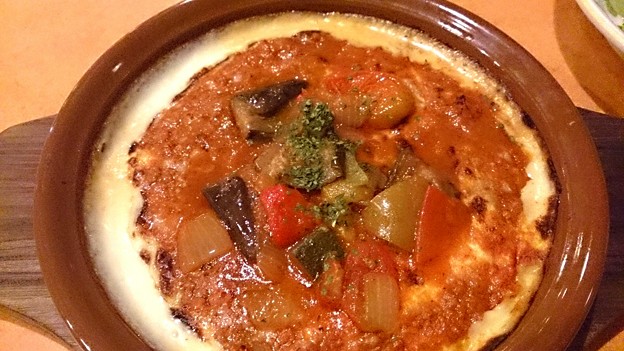
-Saizeria: Doria with Meat Sauce – 299Yen

https://www.saizeriya.co.jp/menu/v4_201812/#p=1

-ガスト(Gasuto): Cheese in Hamburg – 999Yen

https://www.skylark.co.jp/en/gusto/menu/index.html

-びっくりドンキー(Bickuri Donkey): Cheese-Burg Dish – price: depend on the store

https://www.bikkuri-donkey.com/menu/ (Menu is not in English)

-Denny’s: Devil’s Brownie sundae – 603Yen

https://www.dennys.jp/global/pdf/menubook-st.pdf

There are many seasonal dishes and delicious desserts as well, it is worth looking at the menu! MMM, I need to eat them asap!

24th January – 睦月

お金 (Okane)‐ Money

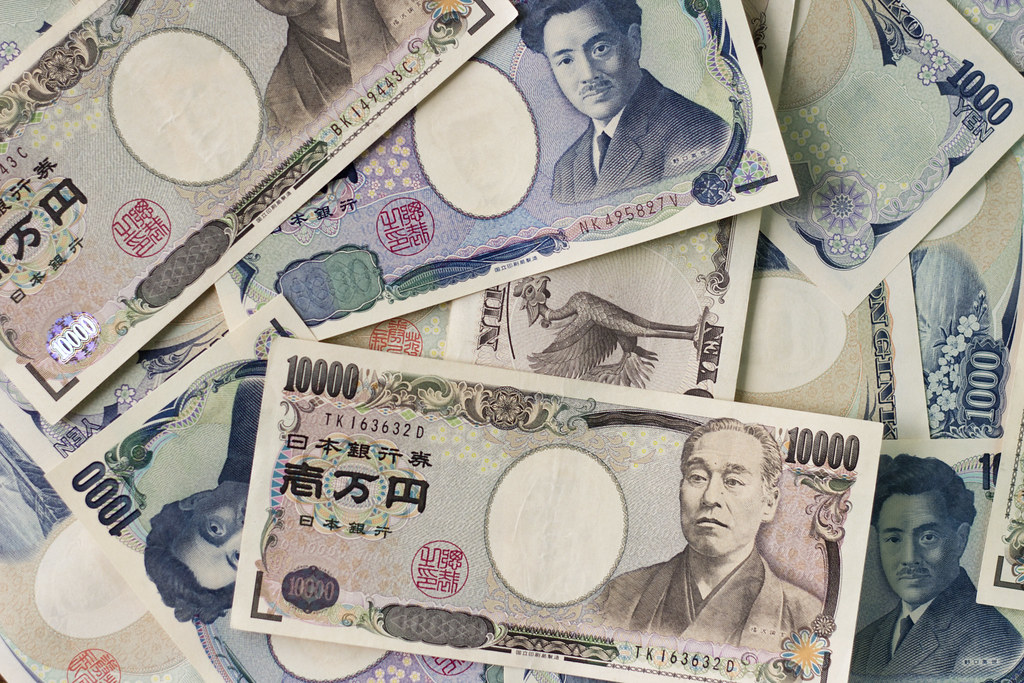
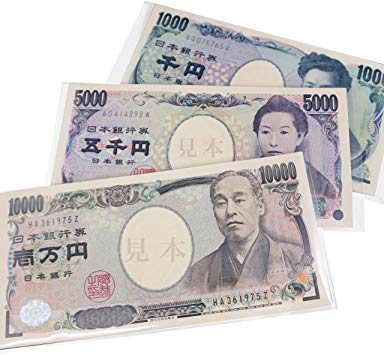
Japanese Money, currently we have 10000Yen / 5000Yen / 2000Yen* 1000Yen paper money

and

500Yen / 100Yen / 50Yen / 5Yen / 1Yen coins.

*Very rare as it is no more produced

There used to be the paper money for those all coins, and if you have one of those, it can be worth 20000 times more than the actual value. Also notably, if you have a Japanese money with an error made during the process of producing at the factory, it might worth crazy amount more than the actual. So if you have them, it is better not use them to buy drinks!

Currently 100Yen is worth 0.91 US dollar (1:30am January 21st 2020), so considering US1dollar as 100Yen can be easiest calculation.

In the first half 2021, new 500Yen design is going to be generated. Moreover in the first half 2024, there will be the new design of 10000Yen and 5000Yen paper money to be created.

Secret about Japanese currency

[There are SMALL words printed on Japanese paper money?!]

On each side of 10000Yen, 5000Yen and 1000Yen paper money, there are very tiny Katakana letters of  ‘二’ ’ホ’ ’ン’ (=Japan) hidden.

Ok, I can give you one answer for back side of 1000Yen: Check the Cherry Blossoms at the right top, each flower has one very tiny letters!

[There are 1000Yen paper money that cannot be used at Vending machine / ATM?!]

It was reported that in May 2006, One of the money making factory had defect failure and the 39500 of 1000Yen have left as faulty, the vending machines and ATMs do not accept them. Those has been distributed but those are still usable in normal shops. If you wish, bank will exchange that to the complete ones.

[Paper moneys are distinguishable for blind people!?]

Have a look at right bottom edge of the paper money;

10000Yen has corner line

5000Yen has octagon shape

1000Yen has bottom line

So that people can touch it to distinguish!

[See through the paper money!!!]

For the paper money, if you see them with the light, the 3 lines for 10000Yen, 2 lines for 5000Yen and 1 line for 1000Yen shows up on the right side.

All those techniques are used in order to prevent the fake money. It has fantastic features hidden in each money, if you know any interesting techniques used in your countries’ currency, let me know:D

Design a site like this with WordPress.com
Get started