23rd January – 睦月

コンビニ (Conbini)

The shorter way to say the convenience store in Japan. Most Conbini open 24/7 and have variety of items.

Now that I do not have much to write about Oshougatsu topic, I will start writing about general stuff about Japan!

There are numbers of different Conbini chain stores (Daily Yamazaki, Ministop, local Conbini etc…), and some of them have different specialty for the shops in order to differentiate to the other chains. For instance, Daily Yamazaki is specializing bread and there are variety of bread selling.

In Conbini market, the three big companies are:

LOWSON (No. 3) more than 13000 stores

Family Mart (No. 2) more than 16000 stores

Seven Eleven (No. 1) more than 20000 stores

(in 2019)

Japanese conbini not only sell variety kinds of items (food, bento, sweets, snacks, drinks, magazines, mangas, stationary, livingwear etc…) but also people can pay taxes, send money, payment for concert. Moreover, there is a bathroom public people can use! Therefore many people especially drivers drop by to use the bathroom.

Conbini is very convenient and people rely on it so much, but on the other hand, there are many problems relating to those shops.

Firstly, as most Conbini opens 24/7 and they open every single days including new years. Therefore, some people who works there must work on those days even they wish to have a day off. The pay for these holiday generally is not high (probably 100-200yen (US1-2dollar) difference?). In Japan nowadays, there is a trend of reviewing the work life balance for everybody called ‘働き方改革 (Hatarakikata-Kaikaku)’, therefore, some conbini blanches also took the action toward this revolution and take off days or stop working 24 hours every day.

Secondly, since Conbini deal with food, there are crazy amount of food throwing away every single day, from each shops. This has been a serious problem for decades. Most of foods are expiring within 1-2days and has to be thrown away even they are still edible. Shops set the price lower when it gets close to the expiry date, but still there are huge amount of left over.

Lastly, because Japanese Conbini has to handle many roles (not only normal selling, stocktaking but also deal with tax handling and online payment stuff) plus 24/7 opening, not many people wish to work there. Conbini work is considered as high volume work lord with low wage. Thesedays, when you go to Conbini, you might recognise that there are many people from other counties working. This fact relates to the problem of not many people want to work there. For people from other countries, working at Conbini is one of the greatest status – they must speak Japanese well, dealing with many tasks in Japanese. Furthermore, some says the knowledge gained from working at Conbini can help them grow own business back home.

Thanks to those people who work at Conbini 24/7, we can have a great life in Japan. We should be more grateful for those people who support our life flow better.
22nd January – 睦月

正月遊び (Shougatsu-Asobi)No.3

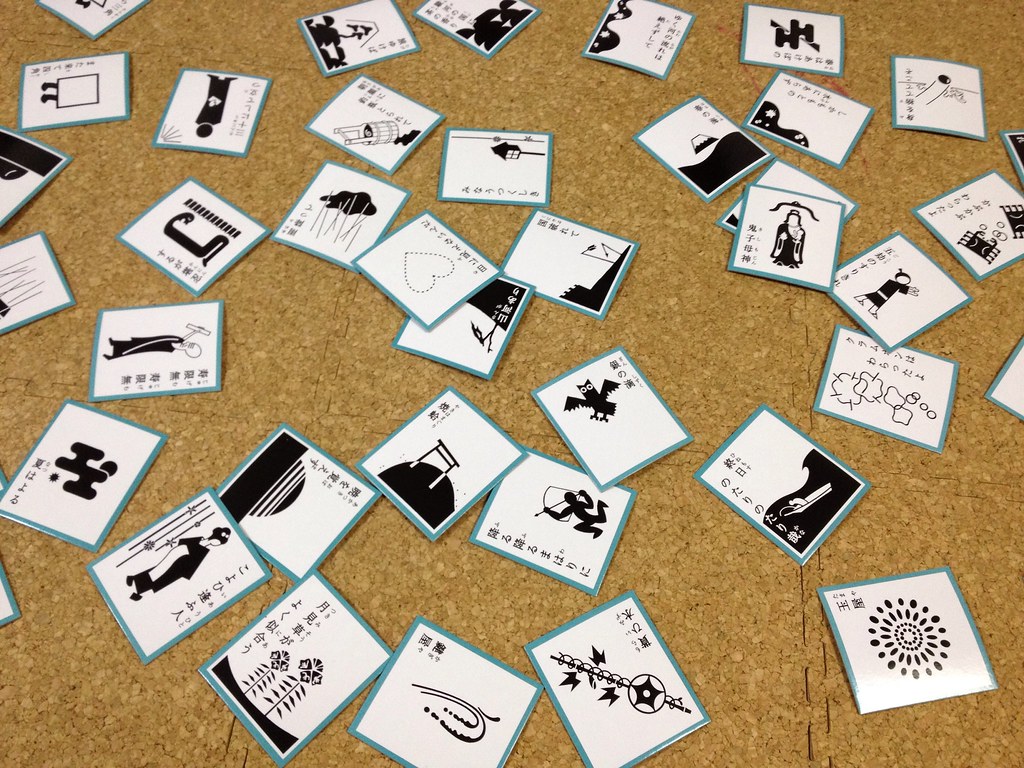
かるた (Karuta)

Karuta was originally came from Portugal, in Azuchimomoyama Era, one ship came to Japan and introduce the game called ‘ウンスンかるた(Unsun Karuta)’. Carta means ‘card’ in Portuguese. This game was popular among the nobility in Heian Era – was called 貝合わせ (Kai-awase) using the shells. Each shells were painted and written poetry, finding the paired poetry and drawing to play.

In the end of Edo era, it was used for learning the Hiragana and Proverbs while enjoying to play.

How to play: (Play with more than 3 people) Separate the card to word cards and drawing cards. Then spread the drawing cards on the floor.

One person read the 読み札(Yomifuda) with words and proverbs, and the others find the matching drawing quicker than the other players. The person who get the most cards wins the game.

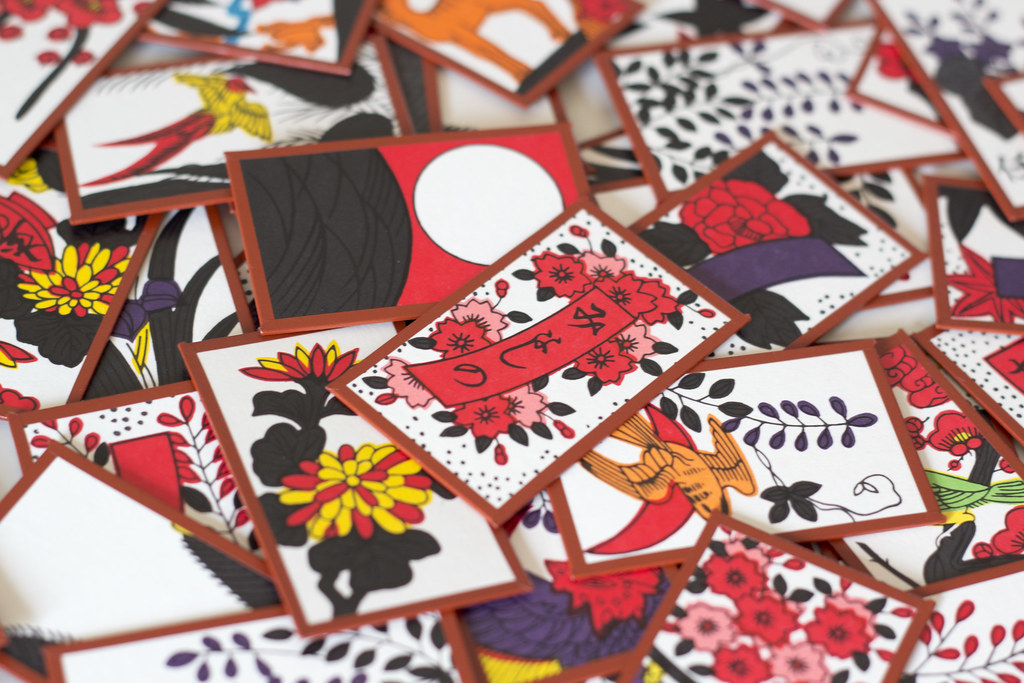
花札 (Hanafuda)

Another type of Japanese card game, was introduced during the Edo era.

It was used for gambling at that time and many warrior 武士(Bushi) were addicted to it. Therefore, the government started to prohibit this game. However, those worriors were too obsessed to quit this gambling game, they arrange this game and secretly played after the prohibition law.

Long time after, in Meiji period, when Japan started to gain culture from the other countries, the card game trump came in. Then Japanese government finally allow people to play Hanafuda again only for entertainment reason, not for gambling.

If you are interested in playing this game, this website might help you: https://jpf.org.au/jpf/jpfmedia/Hanafuda-instruction.docx-A3.pdf

The reason why Hanafuda / Karuta are almost extincting is that there had been a tax called ‘Carta tax’. This tax were to paid by the companies where create card games. Therefore, many companies stopped making them or they bankrupted due to this tax.

21st January – 睦月

正月遊び (Shougatsu-Asobi)No. 2

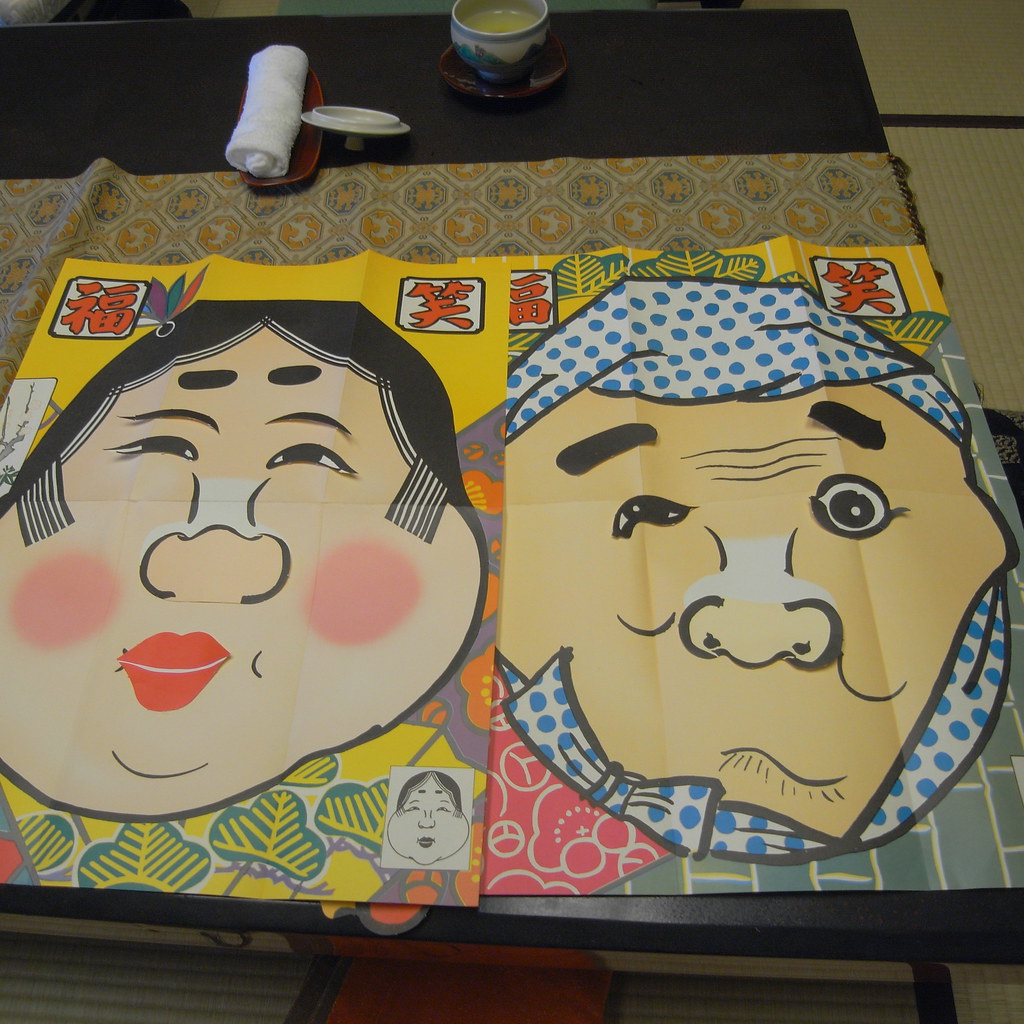
福笑い  (Fukuwarai)

Since Meiji period, it has been played, Fuku means happy, Warai stands for laugh in Japanese.

Blindfolding one person and placing the face parts without looking. Eyes, eyebrows, nose and mouth… As people guess the position but it hardly be placed where it should. Because the face looks funny, it make players laugh. Moreover, there is a proberb saying 笑う門には福来る = “Warau kado niha Fuku kitaru” means there comes lucks if people laugh – that is why it is called Fukuwarai.

Exif_JPEG_PICTURE

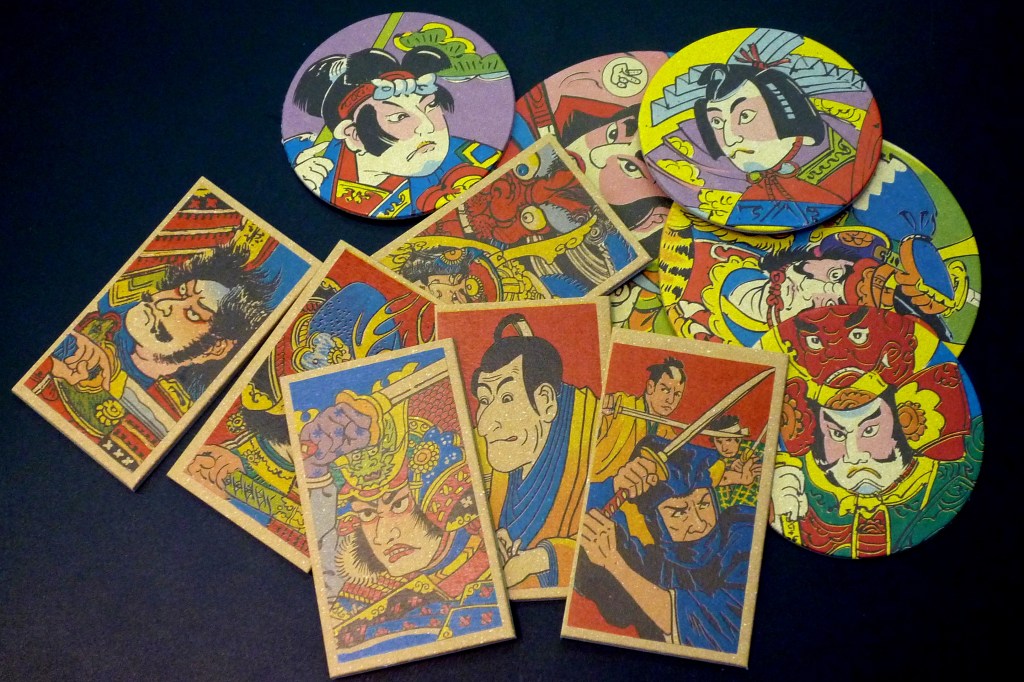
めんこ (Menko)

Smashing own thick paper toward the ground and moving the others’ thick paper by the wind, pressure and impulse to win. The person who moved Menko gets the others’ Menko. The one who have more Menko is the winner.

It used to be made out from the thick cray shaped as a face, it was called 泥面子 (Doro-menko). Men (面) means face in Japanese. As the time goes, it is made with thick paper.

起こし (Okoshi): turning over the others’ Menko to win.

はたき (Hataki): Draw the circle on the ground and pushing the other Menko out from the circle by utilizing the wind, pressure and impulse to win.

おとし (Otoshi): Place Menko on the top of the box and push the others’ Menko to drop.

20th January – 睦月

正月遊び(Shougatsu-Asobi)No. 1

Traditional games that are played often in Oshougatsu time.

In Japan, Many kids used to play traditional games in Oshougatsu time. However, because of many reasons including the advance of video games, nowadays people rarely play traditional games. Here are some of the extinguishing games:

羽根突き (Hanetsuki)

Badminton-alike game. Can play solo or 2 people. Wooden racket and Wings with a hard seed called 無患子 (Mukago).

This game was originally from China. In China, they put a coin under the wings, this has changed to the seed in Japan and played from Muromachi period. Person who lost the game were to treat sake (Japanese alcohol) to the winner.

It was believed that playing this game eliminates the bad luck therefore people used to play in the end of the year. Moreover, the seeds has the meaning of no illness for the children, so it is considered to give a great health for the kids.

Tsukibane: Solo play – count how many times you can lift the wings up without dropping.

Oibane: 2 people to play – count how many times they can keep lifting the wings up without dropping.

凧あげ (Takoage)

???????????

Kite flying game, the higher the kite flies, the more chance that wish will deliver to the gods. The rules for the games are various; One is to drop the others’ kite, the another is to cut the kite strings in order to win.

Kite was also came from China, and they used kite to fortune-telling and battle equipment. When it first arrived in Japan, it was played by nobility just for an entertainment. In the Sengoku period however, it transferred to the similar usage to China; using for battles – To check the distance toward the enemy group / To fire the distant area where the enemy group stays. Then in Edo period, kite became a celebration gift for the new born boy babies.

Kite is called ‘Tako’ (=Octopus) in Eastern area, and ‘Ika’ (Squid) in Western area, this is because when the kite goes up in the sky, it looks like those fishes.

In the next coming blog, I will introduce other Shougatsu Asobi, so stay tuned!

19th January – 睦月

ことわざ(Kotowaza)1月 冬

Proverbs for January, Winter

一月往ぬる二月逃げる三月去る

Ichigetsu inuru, nigetsu nigeru, sangetsu saru

From January to March, there are many events so feels like those months pass very quickly. each verbs has the same pronounce as the months, Ichi (1) – Inuru, Ni (2) – Nigeru and San (3) – Saru.

一年の計は元旦にあり

Ichinen no kei ha Gantan ni ari

Plans for the year should be made in the morning on 1st January.

It is important that when people start something new, they should plan well at the first point before conducting it.

朔日ごとに餅は食えぬ

Sakujitsu gotoni Mochi ha Kuenu

People can eat rice cake in the Oshougatsu, but they do not eat it every time when the new month starts.

There is no guarantee that everything goes as you wish.

目の正月

Me no shougatsu

The best season in the whole year is Oshougatsu.

In Oshougatsu time, there are many things that cannot be seen during the year. Looking at the things which are unique and beautiful to enjoy.

18th January – 睦月

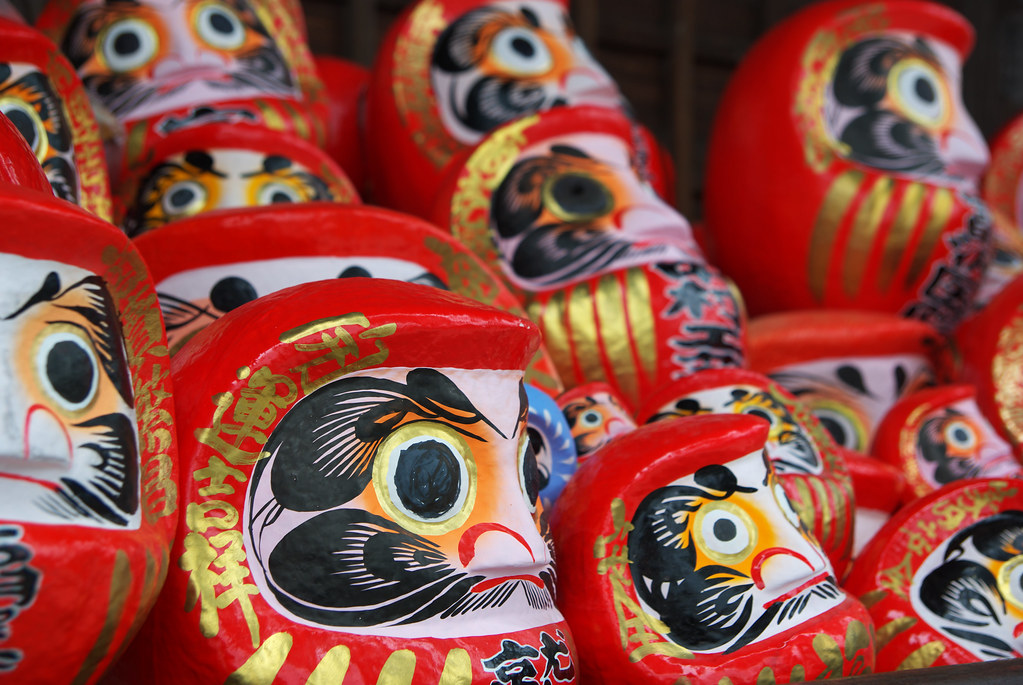
達磨 (Daruma)

Japanese traditional doll with weight at the bottom.

In the Shougatsu time, people draw left eye on Daruma doll and make a wish. Then if the wish comes true, they draw the right eye on it.

The doll with weight called 起き上り小法師 (Okiagari-koboshi) was originally made about 1400 years ago in China and it was introduced to Japan in Muromachi period.

Okiagari-koboshi wakes up every time when something tries to make it fall down – this unconquerable spirit was seen as the same as 達磨大師 (Daruma-Taishi), therefore, eventually Japan modeled this person for the Daruma doll.

Daruma-taishi was from India and he has an anecdote that he did 座禅 (Zazen- one types of meditation while sitting the typical way) for 9 years continuously so his arms and legs got rotten. That is why Daruma dolls do not have arms and legs.

Nowadays, people draw the Daruma dolls’ eyes, however in the old time they used to have eyes. Why did the eyes disappear?

There are one story that once apon a time in the Daruma shop, one of the customers did not like the eyes on the Daruma. So the shop owner sold the Daruma without eyes. This was the start of tradition that customers drawing eyes on Daruma.

There were only red Daruma sold before, but since Shouwa peroid, there are more variety in colours and each has meanings:

Black – business prosperity

Yellow – great harvest, economic fortune

Gold – Economic fortune

White – achieving goals

Red – against evil spirit, good health for family

17th January – 睦月

松竹梅 (Shou-Chiku-Bai)

Pine tree, bamboo and plum – the lucky symbols in Japan

Have you ever seen those symbols in Japan?

Probably you have! Not only for celebration, many shops such as Soba shops, Sushi shops use shou-chiku-bai to categorise memu. All 3 symbols are equally fortunate but in order to make difference in menu, shops put those signs as premium (松) – high (竹) – average (梅) quality. BUT! because most shops put this category, some shops reverse the order to average (松) – high (竹) – premium (梅) in order not to be snobbish or shaming when they order. Japanese put a huge importance on what others think about themselves…Complicated!

Reason why those plants are considered as the sign of luck

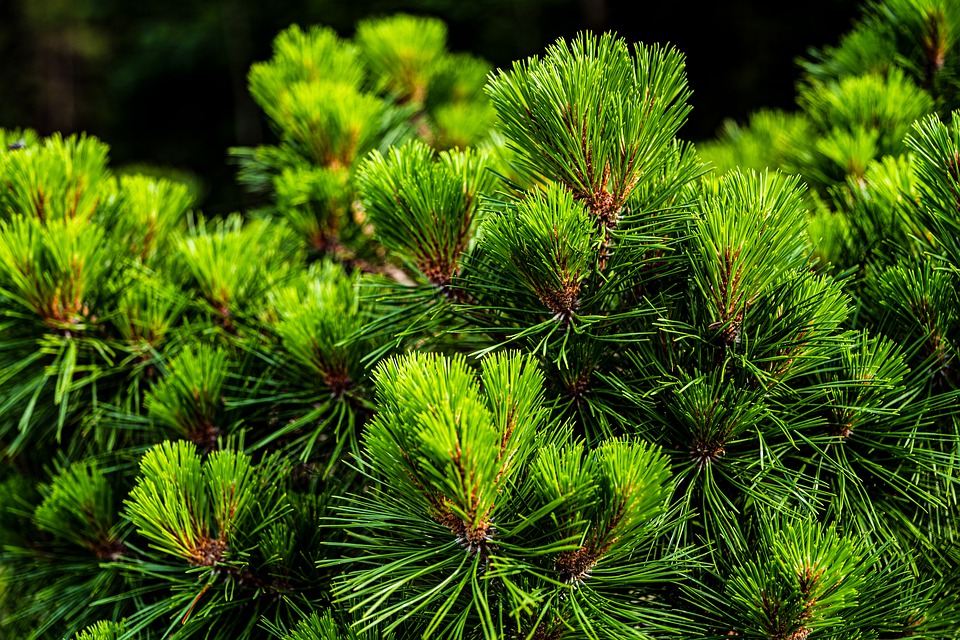
松 (Shou / Matsu)

It is evergreen tree and it does not wither even in winter, keeping the great figure. – leads the image of long strong life. Pine trees have been considered as the tree where gods come down to the ground. Therefore it is believed as sacred tree.

竹 (Chiku / Take)

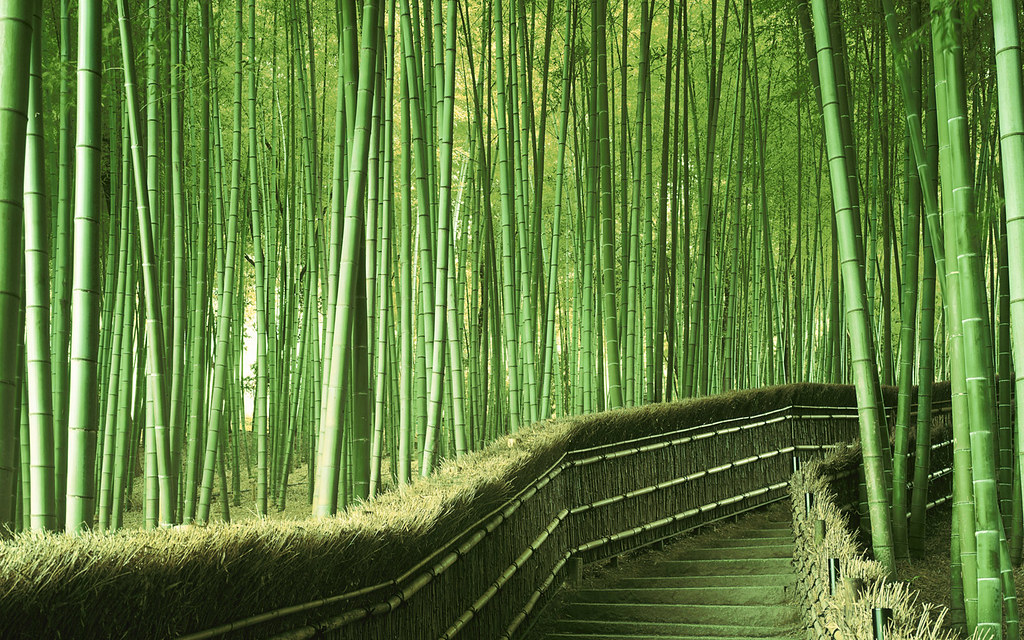
Bamboo grows very fast and it hardly breaks – symbol of growing and vitality.

Japanese have believed that gods dwell in the things with holes inside. It applies to the ancient story of Princess Kaguya (she dwelled inside the bamboo and grew up very beautiful, she was actually from the moon).

梅 (Bai / Ume)

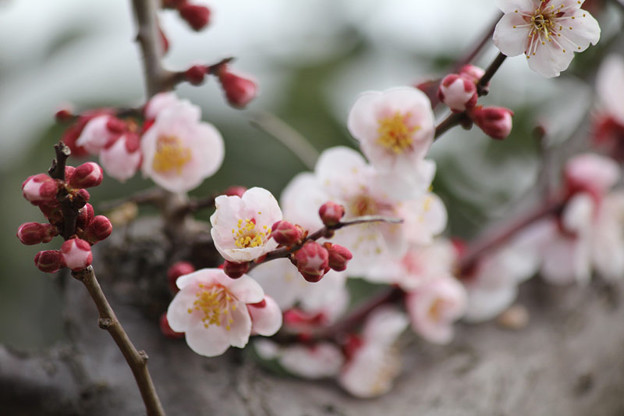
Even the age of tree is hundreds and it has a lot moss, Plum tree blooms earlier than the other trees and the scent from the beautiful flower is noble – the symbol of long life and nobility.

16th January – 睦月

福袋 (Fukubukuro)

The special bags which contains many items inside and people generally cannot see inside until they purchase to open it.

Those are sold on the shop opening sale after New Year, generally held on 2nd or 3rd of January.

福袋 (Fukubukuro) was started at 大丸呉服店 (the Daimaru Kimono shop) in Edo period, they put many left over cloths in bags and sold. Some of the bags contained golden belts(帯 Obi), therefore many people purchased them to test their luck.

Fukubukuro generally contains the items which the total value is higher than the price being sold, and the rule is you cannot return the Fukubukuro even you did not like the items.

Fukubukuro system creates Win-Win business for both shops and customers. Because shops can put the left over goods from previous year, they can still gain profit rather than shrinkage. On the other hand the customers can purchase goods with lower price and there might be a goods that they always wanted to get but could not due to the higher price. Some customers utilize the online platforms to re-sale the goods they did not want to keep.

Well-known department store called 高島屋 (Takashimaya) sold unique Fukubukuro in 2019, one is luxurious travel package worth over 20,000,000yen (about 200,000 US dollars). Another one is the ticket for ladies Japanese world ice hockey team’s teaching session, which costs 20190yen (about 200 US dollars), this Fukubukuro includes the autographs from the team, photo with them and official goods. Those are not ‘inside the bag’ but somehow considered as Fukubukuro.

If you have a chance to be in Japan during the new years time, why don’t you get one of them and see if you can get brilliant goods with lower price!

15th January – 睦月

小正月 (Koshougatsu)

The period putting the New Years’ decoration at home, ends on 15th January. Koshougatsu is the day to send the home coming god 歳神様(Toshigami Sama) to the sky.

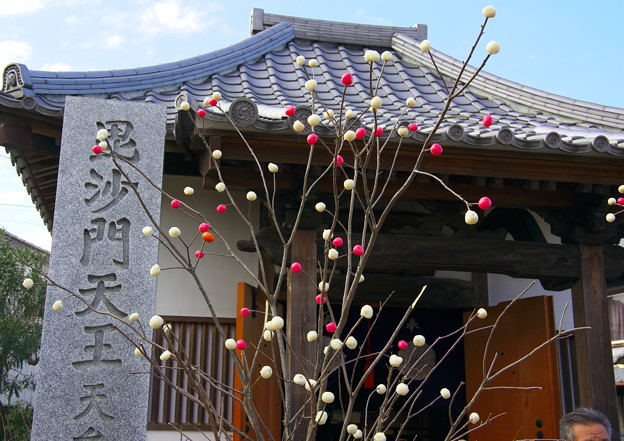
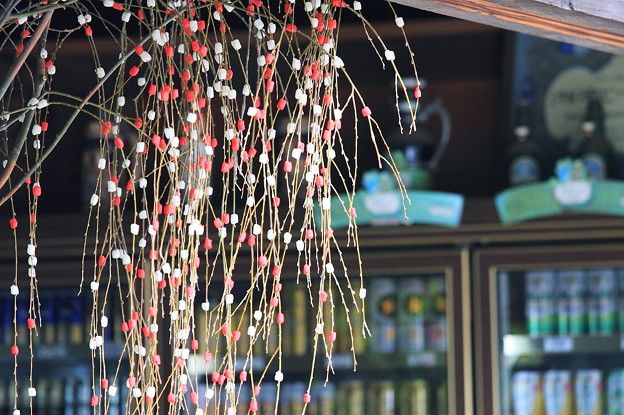
Mochi-bana decoration for Koshougatsu

Koshougatsu is the day to wish for the great harvest for the year. It is also known as 女正月(Onna-shougatsu), the resting day for the ladies who worked very hard for New year cerebration (お正月 Oshougatsu = 松の内 Matsu-no-uchi: during the Kadomatsu is displayed at home).

People decorate a tree with white and red rice cakes instead of Kadomatsu, Shime-kazari and Kagami-mochi (from blog. 1). As this decoration is immitating the rice plants with a lot rice (rice cakes), wishing for the harvest.

On 15th January, it is a tradition to eat red beans porridge. the colour of the red beans (朱色 Shuiro:Red-brown) is believed to have the power of eliminating bad lucks.

Also on this day, in order to send the god back to the sky, どんど焼き(Dondo yaki) is held (blog.6 ). Toasting mochi by the fire of dondo-yaki is told to have a luck to be healthy throughout the year.

14th January – 睦月

センター入試 (sentar-nyuushi)

On one Saturday and Sunday in the middle of January, the entry exam for universities is held for 3rd year high school students. This exam has all the same questions for everybody and depending on the points from that exam, Japanese universities will allow students to join the uni. Therefore, the result of this exam might change the student entire life.

This exam is mostly mark sheet style and it was introduced in 1979.

Around 500,000 high school students take this exam at the same time in each venues located in all the prefectures.

well-known universities usually set the high mark for the entry.

There is another way to get into the university called AO入試 (Ei-Oh-nyuushi), using the personal skills, grades and interviewing without the exam. In this case, students have to have an outstanding history while in high school.

Why do Japanese care about the name value of the university?

This is because people who graduated well-known universities has higher possibilities to get a better job after graduation. Therefore, basically if you could get a great mark and get into the famous uni, your future in Japan is almost guaranteed.

Even it is believed that Japanese university is hard to get in but easier to graduate.

In fact, many famous companies in Japan prefer to hire students who are graduated from well-known university, moreover there are companies where set the requirement for the students that they only hire people graduated from ***University.

Unlikely to the other countries, Japanese have a typical career path after the university. Generally speaking, Japanese students start seeking career from 3rd year of university (total degree completion takes 4 years), and most of the people wishes to gain job during 4th year so they can start working right after graduating University. April every year are the set time frame for all the fresh graduates to start jobs.

Many Japanese companies have this newly graduate hiring position, and they see the students’ potential rather than their related experience. It is great for graduates that they can get into the famous companies without experiences but some people wonder it is better to hire people who have related experience so they can reduce the training cost and time.

Design a site like this with WordPress.com
Get started