3rd January – 睦月

初詣 Hatsu-Moude

Visiting the shrine or temple for the first time in the year, thanking the gods to protect family for previous year and wising the peace and good health for this year.

初詣 (Hatsu-moude) is generally conducted in the very early morning on 1st of January to 3rd of January, but in some region it could be until 7th of January.

There is an auspicious direction for each year and people traditionally goes to the shrine or temple located to that direction called Ehou-Mairi. (恵方詣)

For Hatsu-moude, what people does except wishing for the god in the shrine or temple are;

1. Drawing the fortune-telling to see how the year is going to be.

Omikuji (おみくじ) as a fortune-telling gives a message from the god, and many Japanese predict how the year is going to be.
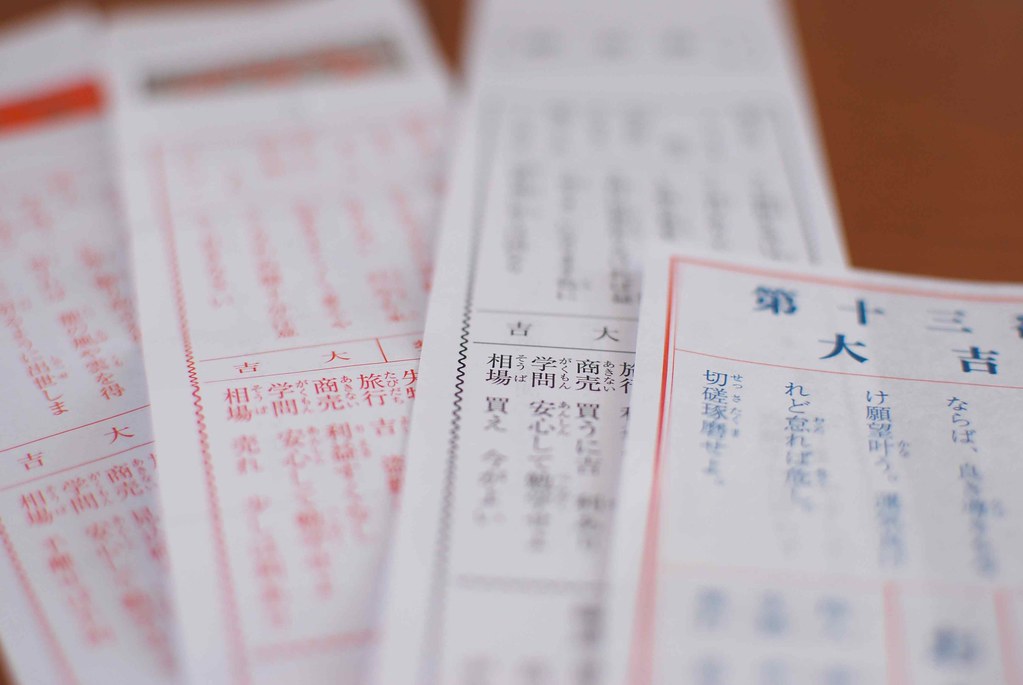
The luckiest one is 大吉 (Daikichi) and goes down followed by 中吉 (Chuukichi) > 小吉 (Shoukichi) > 吉 (Kichi) > 末吉 (Suekichi) > 凶 (Kyou).

The 凶 (Kyou) is not that bad though – means you should work hard so the luck is coming back! Therefore, if you get Kyou, it does not mean the year is going to be awful, but depend on your effort, you can make the year awesome.

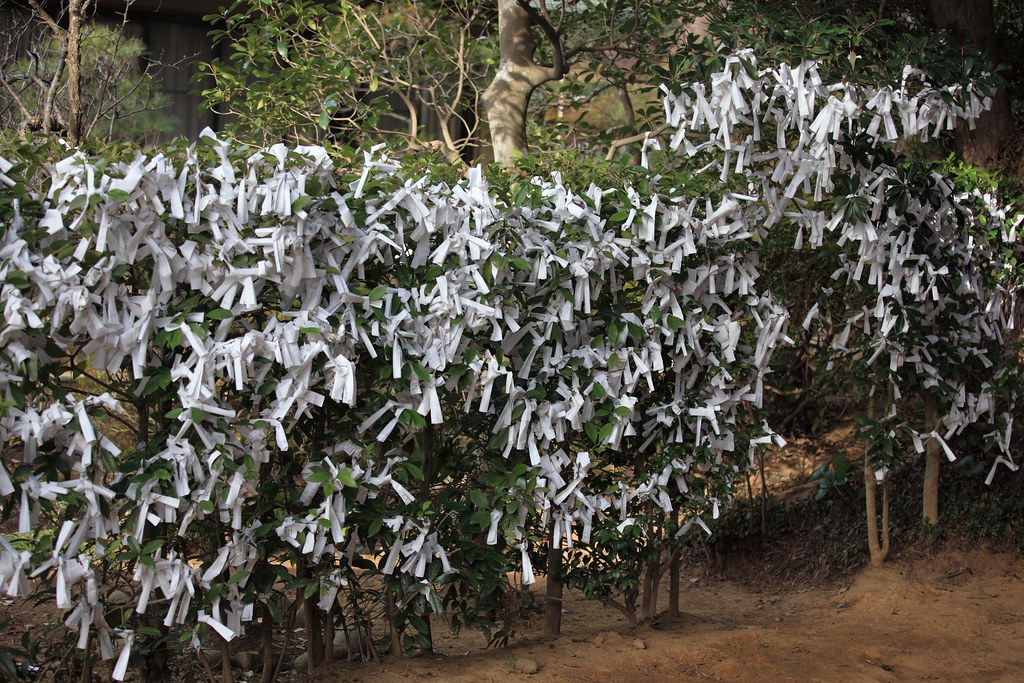
Also if the fortune-telling says 凶 (Kyou), people tie the fortune-telling paper on the tree beside the fortune-telling box in order to leave the bad luck. (there are many different opinions for that.)

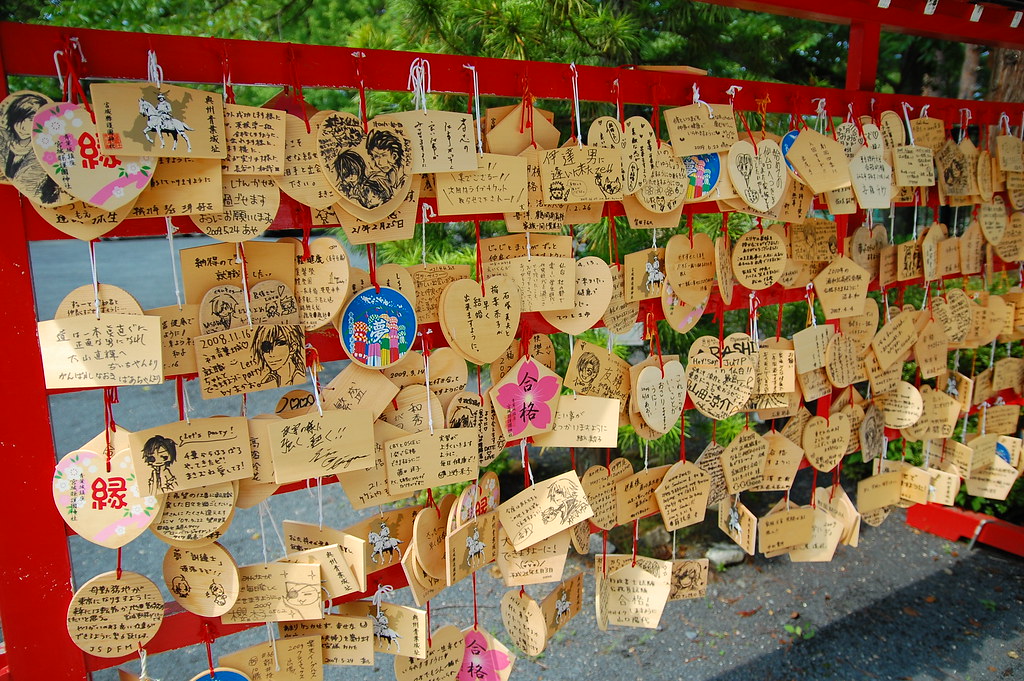
2. Write a wish on the Ema (絵馬) 

Ema (絵馬) is the wood shaped pentagon with horse drawing (these days there are more different shapes and the drawings have more variation, such as other animals, anime characters and so on). Writing wish on this will make the wish come true, people believe.


As I have already mentioned about Toshigami-sama (年神様) on blog 1st January, This is the god who comes to each houses. On the other hand, the god in shrine is called Uji-gami-sama (氏神様), and there is the Hotoke-sama (仏様)=Buddha in temples. this type of gods and Buddha are enshrined by people around that area. So it’s good to visit the shrine or temple as well to welcome / say hi to the gods in the area and Buddha not only welcoming Toshigami-sama.

In another blog, I will explain the manner of visiting shrines and temples. I reckon many of you have already seen the scene of Japanese praying at shrines and temples. There are particular way of how to pray, so stay tuned:)
2nd January – 睦月

初夢 (Hatu-yume)

What did you dream last night? Japanese people have believed the dream fortune-telling since old times. Especially the dream people had for the first time in the year is considered as the most important one as it will forecast the rest of the year.

Generally speaking, people consider the first dream (Hatsu-yume) as the dream people have between 1st January night to 2nd January night. However, it has a long discussions about the definition of Hatsu-yume. Before Edo period it was considered from 31st December to 1st January, on the other hand, in the middle of Edo period it turned into 2nd to 3rd January. Then, in Meiji period, people started to argue it is the dream between 1st to 2nd January (Many arguments exist about history of Hatsu-yume).

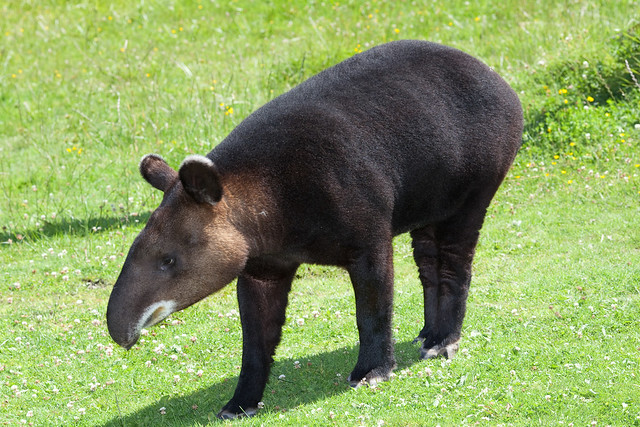
This dream fortune-telling was handed down from China, started for the sake of having a good dream. Chinese put the drawing of tapir which were believed as they eat the bad dreams, under the pillow so that hoping they will not have a bad dream. This habit transferred to Japan and instead of tapir drawing, Japanese put the drawing of Seven Lucky Gods in order to have a pleasant dream. If they had a bad dream even they put that seven Lucky Gods drawing, they have to throw that drawing into the river right after waking up according to the tradition.

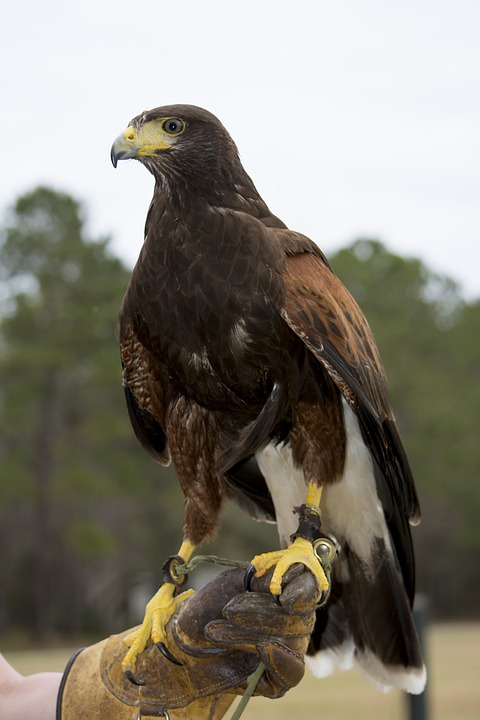
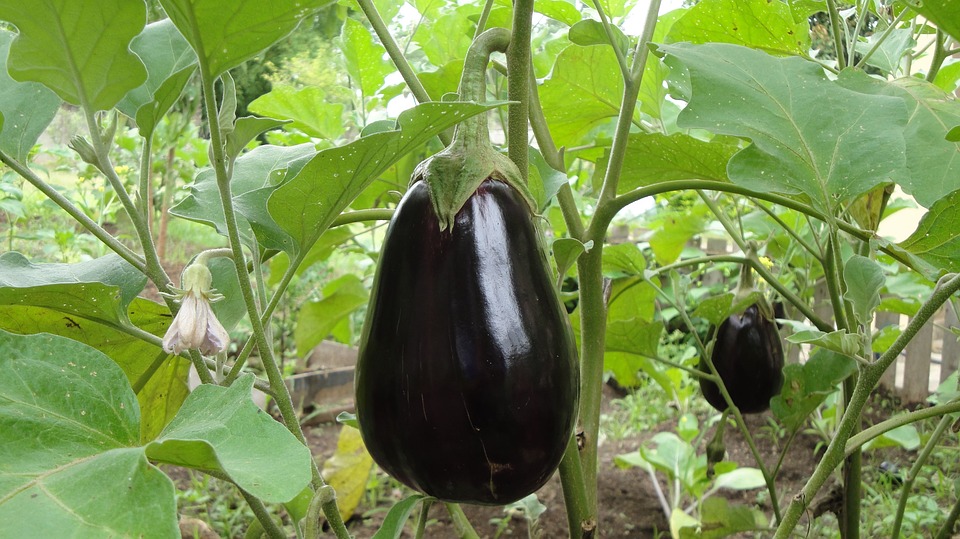
Bringing back to the topic of Hatsu-yume, it is told that if those three top objects appear in the first dream of the year, the year is going to be awesome: those objects are known as ‘Ich Fuji, Ni Taka, San Nasubi’ = 1. Mt. Fuji 2. Hawk 3. Eggplant

富士 – Mt. Fuji

meaning of building an outstanding career. Fuji (富士) is similar pronunciations as immortality (fushi 不死) and safe (buji 無事), therefore it is considered to have power of good health.

鷹 – Hawk

meaning of infinite possibility and dream comes true. Hawk is Taka in Japanese, and it is the same pronounciation as high (高), so the luck for this year will go up. Hawk is considered as elegant looks therefore it implies building pride.

茄子 – Eggplant

Eggplant is pronounced as Nasu, and it has the same pronunciation as accomplish (成す), therefore considered as accomplishing something in the year. Also the eggplant does not have any hair on the surface and it says ‘毛が無い – ke ga nai’ in Japanese, which has the same pronunciation as ‘no injury’ (怪我無い), therefore it has the meanings of good health and descendants prosperity.

The origin of those auspicious objects has not purely defined but some of the possibilities are; those were defined according to the Shogun Ieyasu Tokugawa’s favorites / the things that are valuable in the area where the Shogun Ieyasu Tokugawa lived, called Surugakoku (駿河国), now the area is located in Shizuoka prefecture.

It is funny to know that dream fortune-telling results are based on the name of the objects as it sounds like the good meanings. Seems like there are many traditional those sound-alike good lucks in Japan.

1st January – 睦月 (Mutsuki)

お正月 (Oshougatsu)

明けまして おめでとうございます (Akemashite Omedetou Gozaimasu)

— Saying to each other and celebrate the New Year. Thanking the gods for letting people pass through the previous year safely, and celebrating about welcoming the gods again to earth.

A Happy New Year! In Japan, it is the celebration of welcoming the gods who bring happiness, harvest and good health. This celebration generally lasts the first 7days after the new year started, however some part of Japan continue celebrating until 20th January (Western area). The first 3 days are called ‘Sanganichi’, most of company takes holiday for those days. Then days until 7th January are called ‘Matsu no uchi’, keeping the Matsu (Pine tree) decoration in place.

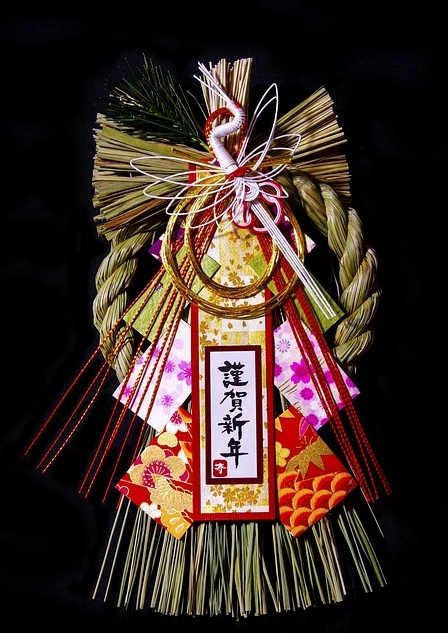
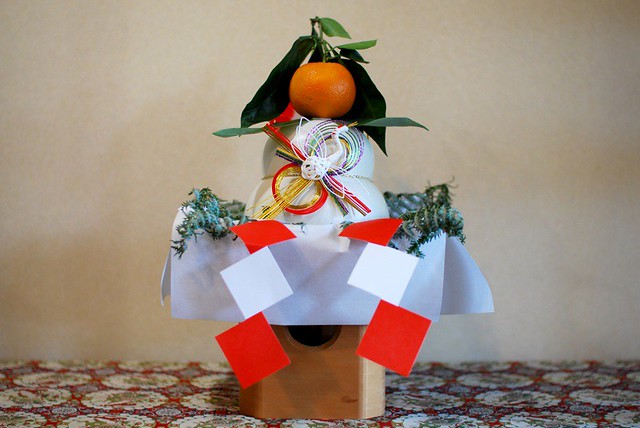
In New Year time, people welcome the god who comes to each houses from the high mountains called ‘Toshigami-sama’ by locating New Year decoration such as Kadomatsu (Pine tree decoration), Shime-kazari (Rope made of straw and hemp) and Kagami-mochi (Round-shaped rice cake).

Kadomatsu

Works as a landmark by displaying so that god can find and visit the house. It is the symbol of healthy and long life. ‘Matsu’ pine tree (松) is the same pronunciation as waiting (待つ), therefore it is implied as waiting for god.

Shime-Kazari

It is the landmark of clean place where cuts down the impurity. Normally displayed in front door of the house.

Kagami-mochi

In old time, mochi (rice cake) were eaten in the special occasion such as celebration. It is considered as food that gods eat. The shape of the Kagami-mochi looks like a circle mirror (DouKyou – kyou also pronounced as ‘Kagami’) which is believed as a place where gods stay inside, so it is called as it is.

Welcome to Little Japan Dictionary

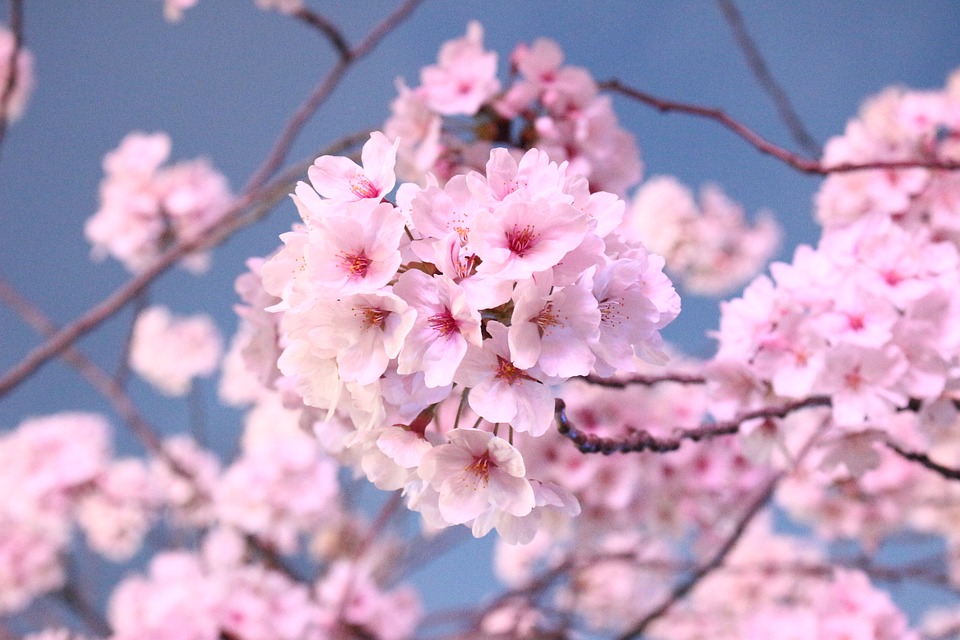
Sakura – Cherry Blossom

リトル ジャパン ディクショナリー へ ようこそ

Firstly, thank you so much for checking this blog, your visit motivates author to write this blog. I hope you will like this page!

This blog is starting from 1st January 2020 and continues as it goes.

In this blog, Author plans to provide:

  • Japanese Culture
  • Japanese Tradition
  • Japanese People
  • Tip of Living in Japan

and more in English so non-Japanese speakers can recognize many unique and interesting fact of Japan. It will be posted mostly every day so if you do not want to miss any cool facts, why not subscribing this blog!

Okay, now let’s get started:)

Design a site like this with WordPress.com
Get started